Showing posts with label holistic farming. Show all posts

Friday, February 13, 2015

Attracting Wild Bees & Wasps to Landscapes & Farms is the best Insurance Policy

It's not only good business model, but a great insurance policy as well
Photo by Brett Blaauw

There are 420 species of bees in Michigan.
 The more pollinators attracted to farms, the better.

This is not going to be the usual save the Honey Bees story, although I love honey bees. But the problem is so much attention is given to the semi-domestic critter of Euro variety fame, that almost no attention of wild bees comes down line to the average person. I'm talking all manner of wild bees and beneficial parasitic wasps. While all bees will suck nectar, countless varieties are also parasitic and even carnivorous. What is amazing and exciting is that more and more farmers and small groups on their own are taking this to heart. Never expect any help from industrial agriculture which has no interest in ruining their business model. I actually started this post as a draft last May 2014, but you may wish to read the article on your own from the link below: 

Michigan State University: "ATTRACTING WILD BEES TO FARMS IS A GOOD INSURANCE POLICY"
Conservation Biological Controls

Habitat Management to Encourage Beneficial Insects and Control Pests

http://www.xerces.org

Vineyard Brands, Vermont, Biological Controls with Geese
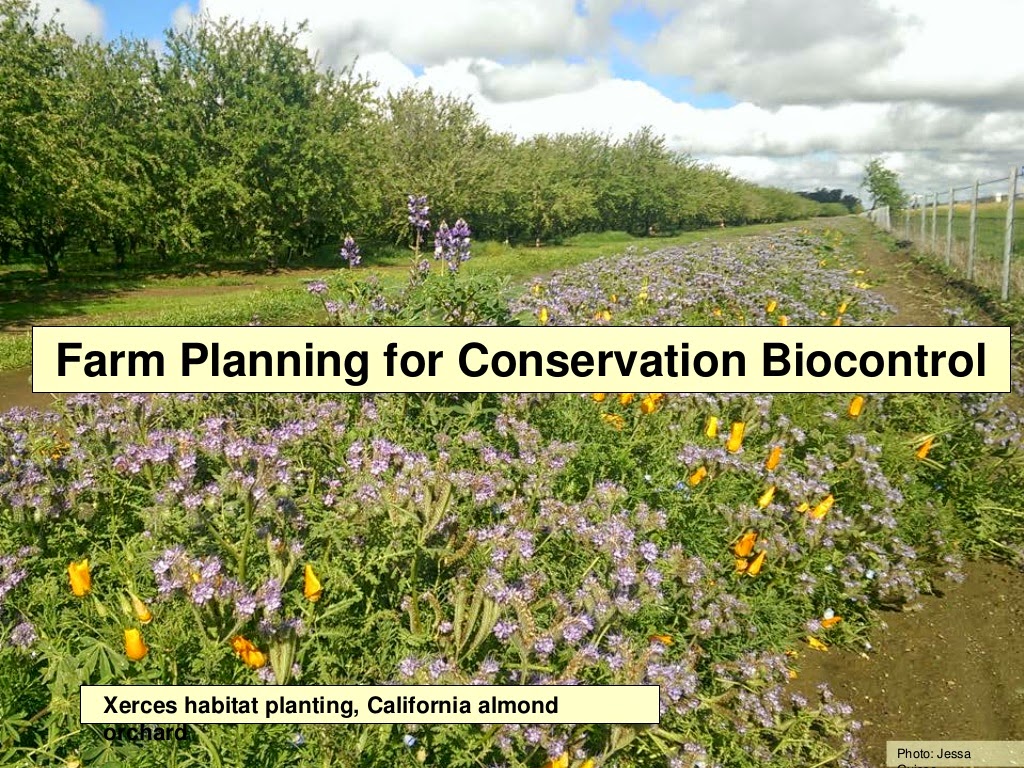
Recently I stumbled upon a slideshow presentation from the, Xerces Society, which was set up by Wildlife Biologist Marcus Miller, who actually put on a beautiful presentation of photos with brief footnote comments which illustrated  various beneficial insects and exactly what they can do for your garden, landscape or farm. There are even slides of some Central Valley California Farmers planting rows of native flowering California Chaparral to facilitate this purpose of attracting beneficial insects further, but I'll reference it in another post. This Conservation Bio-Control presentation was again, created by Wildlife Biologist Marcus Miller, which referenced many types of beneficial insects for pest control as opposed to the conventional pest management control recommended and controlled by this world's Corporate Industrial Agriculture business interests. Sustainable management tips are given on Colorado Potato Beetle and European Corn Borer and many others are presented in this wonderful slide presentation. Presently, there are many small Farm operation Vineyards like the above photo, who are taking up the natural approach to pest control. Without me commenting very much, I'll let the slides do the work, with only a few comment interludes.
~~~~~~~~~~~~~~~~~~~~~~~~~~~~~~~~~~
~~~~~~~~~~~~~~~~~~~~~~~~~~~~~~~~~~
~~~~~~~~~~~~~~~~~~~~~~~~~~~~~~~~~~
~~~~~~~~~~~~~~~~~~~~~~~~~~~~~~~~~~
~~~~~~~~~~~~~~~~~~~~~~~~~~~~~~~~~~
~~~~~~~~~~~~~~~~~~~~~~~~~~~~~~~~~~
~~~~~~~~~~~~~~~~~~~~~~~~~~~~~~~~~~
~~~~~~~~~~~~~~~~~~~~~~~~~~~~~~~~
~~~~~~~~~~~~~~~~~~~~~~~~~~~~~~~~~~
~~~~~~~~~~~~~~~~~~~~~~~~~~~~~~~~~~
~~~~~~~~~~~~~~~~~~~~~~~~~~~~~~~~~~
~~~~~~~~~~~~~~~~~~~~~~~~~~~~~~~~~~
~~~~~~~~~~~~~~~~~~~~~~~~~~~~~~~~~~
When you look back at many of the things you were taught in school from government approved textbooks on how they believed the way our natural world worked according to the then known Science, we are at a point now where people are realizing that Science wasn't always right after all. So you begin to question and become suspicious of blanket statements about this thing called "Scientific Certainty" as it's presented to us by the Corporate Industrial Science folks. The sad state and poor health of our planet Earth's natural world is a testament as to how scientific consensus has actually been more wrong than right. It's easy for the science type defenders to view such material as presented by Marcus Miller above and say, "Well see, Science is self-correcting". Except when it's not and then is glaringly wrong. The biggest problem has been not Science being used as a tool, but the people who have appointed themselves as being in charge of just how one goes about using that tool. The Industrial Science continually alleges only they have consensus in science, because it's been their prime way of bullying the people [the general public] into believing many things which are not true. Originally, wasn't the whole point of science that we have to question consensus, especially when we see it going in the wrong direction ? We all should have the freedom to debate on how to interpret evidence. But the question is, what exactly is real evidence, especially since both sides claim to have 'The' evidence ? 
"The available body of facts or information indicating whether a belief or proposition is true or valid . . "
All sides have what they view and claim as the evidence to back their version of what is the truth, but it's that interpretation & challenging of the said evidence that put's one at odds with the consensus as established by the prevailing ruling orthodoxy within Science. In the case of how to Farm, Landscape and Garden, Industrial Science claims all knowledge must come through them because only they have 10s of 1000s of peer-reviewed papers and the scientific consensus is on their side as a result. So they argue from authority and citation bluff their way into the pursuit of wealth. But how can the average person tell which evidence is truly relevant ? In a Court of Law the rules for relevant evidence are defined as anything that has a
"tendency to make a fact more or less probable than it would be without the evidence"
You should also note however that for evidence to be evidence it need not compel a conclusion; it need only have a tendency to lead to the conclusion. Now I didn't really want to bring this up again, but take the GMO debate in December of 2014 at "Intelligence Squared" as a court room example of sorts. In the end if we are to believe the results of the audience polling, we could conclude that Team Organic had no evidence to make their case. At least this is what you read from readers all over the Internet who made this claim. Hence in most discussions after that debate, defenders of GMOs insisted that Team Organic lost because they had no evidence. That would be an ignorant conclusion. Of course there was evidence. It was a matter of not properly interpreting that evidence and showing the audience where it was relevant. However, the evidence they presented and the way they presented it just did not persuade the audience whom we could liken to a Jury in a court of law. In actual fact, I personally know that they did not use ALL of the evidence that was at their disposal, as I previously pointed out in another post. Their case was not professionally prepared which was irresponsible on their part. If this had been a real legal case, any defendant who lost as a result of poor judgement on the part of their lawyers, would have easily been allowed an appeal if that debate were a real court trail. That's why they lost, not because the Team Monsanto had better evidence. They didn't. They bluffed and definition shell gamed their way around the evidence which they twisted masterfully. It is however unfortunate that we and nature all have to be paying the high price for flawed evidence which allows the prevailing orthodoxy to control the world's food supply. Nothing under the present system will change that. However, there are several things people can do personally as individuals as to their own urban landscape or gardening project, or even small farm. I'll post some of those ideas from Marcus Miller again in my next post (PART II) from the link below here:
How to construct the best Insurance Policy for your Agricultural Business Venture
~~~~~~~~~~~~~~~~~~~~~~~~~~~~~~~~~~ 
Complete Reference from Xerces Society slide presentation:
 Xerces Soceity Marcus Miller Presentation on Biological Control Habitat
Michigan State University Extension: "Attracting Beneficial Insects with Native Flowering Plants"
Mother Earth News: "Organic Pest Control: The Best Plants to Attract Beneficial Insects and Bees"

~~~~~~~~~~~~~~~~~~~~~~~~~~~~~~~~~~
No GMOs and no pesticides: Vietnamese farmers use flowers to protect rice 
http://www.gmeducation.org/government-and-corporations/p217582-no-gmos-and-no-pesticides:-vietnamese-farmers-use-flowers-to-protect-rice.html


How to construct the best Insurance Policy for your Agricultural Business Venture

image: Alan Nicol
This is actually a Part II to my previous post on attracting Bees and Wasps to the Farm and/or Garden. While this slide presentation from the Xerces Society by Wildlife Biologist Marcus Miller which reveals and illustrates real world construction examples in the Central Valley of California on commercial Farms, it should also be noted that these natural approach innovations and guiding principles can be replicated and practical application can also be used for the small farms, urban landscapes and home gardens. This should also impress upon folks that the junk direction with which industrial science has always taken humankind, especially since they pimped how their World War II bomb making chemicals could now be used in their 1950s Green Revolution which was going to save all of mankind in reality turned out to be a disastrous mistake. Nobody questioned their authority back then. But they should do so now. Question who and what you are putting your trust and faith into. Like so many things which are hastily approved for fast and easy profiteering, there are now these long term consequences which every living thing is being forced to pay a high price. The pictures below are another beautiful illustration reveal how nature has always been equipped with tools for arriving at a balance. One of the major things I want everyone to pay close attention to in these hedge row construction zones border croplands in California's Central Valley, is the long over due recognition and use of California's native Chaparral plants and the roles they could well play in saving this part of the world from overuse or use at all of tons of chemicals used in Farming. Take note here, a recent California research study in San Francisco found that wild bees play a major role in pollination within the city, and notice what was key:
"And, in what appears to be good news for farmers in space-starved cities, the amount of pollination a plant received was driven not by how large the garden was, but how densely it was populated with flowers."
 "Previous research had shown that "pollinator deserts" such as the Central Valley of California lack the amount of bees needed to provide adequate service to plants compared with wildland areas" 
(Source) 
So, the determining factor for good garden pollination was not how large it was, but how densely populated it was with plethora of flowers. More and more chaparral hedge rows could be a win win in supplying and regular multi-seasonal flowering array all year long depending on species selected for flowering time [Spring, Summer, Fall, Winter] and just about completely eliminate the need for tons of chemical pesticides. As time goes on, more and more respect will be paid to our California's Chaparral plant community. And to think, the answer was always here all along. View these important illustrations below and take notes people. Looks like those Central Valley Deserts are going to be changing towards a native wildscape much like it was back in history. 
~~~~~~~~~~~~~~~~~~~~~~~~~~~~~~~~~~


~~~~~~~~~~~~~~~~~~~~~~~~~~~~~~~~~~


~~~~~~~~~~~~~~~~~~~~~~~~~~~~~~~~~~


~~~~~~~~~~~~~~~~~~~~~~~~~~~~~~~~~~


~~~~~~~~~~~~~~~~~~~~~~~~~~~~~~~~~~

~~~~~~~~~~~~~~~~~~~~~~~~~~~~~~~~~~

~~~~~~~~~~~~~~~~~~~~~~~~~~~~~~~~~~


~~~~~~~~~~~~~~~~~~~~~~~~~~~~~~~~~~

~~~~~~~~~~~~~~~~~~~~~~~~~~~~~~~~~~

~~~~~~~~~~~~~~~~~~~~~~~~~~~~~~~~~~


~~~~~~~~~~~~~~~~~~~~~~~~~~~~~~~~~~

~~~~~~~~~~~~~~~~~~~~~~~~~~~~~~~~~~
~~~~~~~~~~~~~~~~~~~~~~~~~~~~~~~~~~
~~~~~~~~~~~~~~~~~~~~~~~~~~~~~~~~~~

~~~~~~~~~~~~~~~~~~~~~~~~~~~~~~~~~~
I really loved the use here of California native chaparral and other plants for use as biological control attractants of beneficial insects for pollination, predatory abilities and use as buffers and habitats for these beneficial critters for life within and around farm fields. There are clearly far more to the slide presentation, but you'll have to view it on your own from the link below. They also have a 2014 version which is presented by Pollinator Conservation Specialist Nancy Lee Adamson PhD:

Southern SAWG - Farming for Beneficial Insects (Pollinators, Predators, and Parasitoids) 17 and 18 January 2014
Here is the original January 2015 version in which you've just viewed the illustrated pictures which I've referenced in the post  above and the earlier post. I'll also include other relevant links.
Xerces Soceity Marcus Miller Presentation on Biological Control Habitat
http://www.xerces.org/ 
http://permaculturenews.org/
 http://www.nsfarming.com/
http://www.naturalsequencefarming.com/ 
~~~~~~~~~~~~~~~~~~~~~~~~~~~~~~~~~~
Each region of the globe with it's varying ecosystems operates with the same basic fundamentals as mentioned here. While the photo presentation dealt with attracting local pollinators and predators with native California Chaparral plant community vegetation, you should learn the variables unique to the global region in which you live and make practical application accordingly. For those readers who are from the region of the southwestern United States, here is enormous reference library resource about how the Chaparral plant community operates and functions from this link below:
http://www.californiachaparral.com/
San Francisco State University: "City buzz: Urban pollinators get the job done"