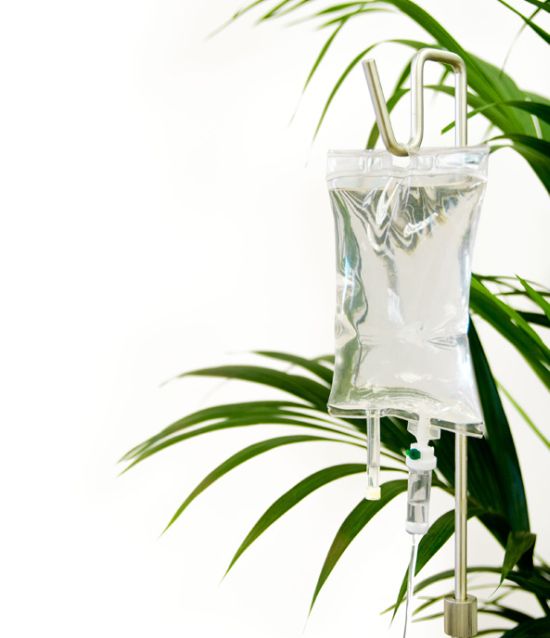
This is a further continuation on the subject of vineyards and underground root networks which fits nicely this blog's purposed intent
Consider this another resource page
 |
| Image - Modern Farmer |
 |
| Turning Water into Wine ??? |
When I first saw the animation above, it immediately brought to mind why all Viticulturalists [installers & maintainers] should create an ecological environment in which vineyards could and should be weaned off the conventional science-based way of farming and one which perfectly biomimics Nature. The centuries old method of dryland farming which has been successful without major problems should be brought back and even improved with a few miner innovation adjustments for no other reason than we now know so much more about the biological machinery which operates all of the Earth's ecosystems successfully. I previously wrote a post about the Groasis Waterboxx which is being used to encourage and force deeper root systems with grapevines. More than anything else, the above animation clearly illustrates the purposed goal of the Waterboxx Cocoon. The illustration appeared in the journal Modern Farmer. The article carried another animated graphic of rainfall totals in various lands where the lowest rainfall areas actually dryland farm, while one of the highest annual rainfall totals was in the Willemette Valley where back in the 1990s, organic wine producers Russ Raney and John Paul discovered that several of their wine-producing peers in were installing drip-irrigation systems in their vineyards. The oddball thing is, this valley receives an average of 42 inches of rain a year which would seem like the last place you’d need to add more water. The dryland farmed countries of Greece and Spain were 14" & 16" of rain. Something doesn't make sense.
 |
| Animated Illustrations - Jason Holley |
Well, looking back in history to pre-1970s, much of California vineyards were dryland farmed. But then giant beverage corporations realized the massive amounts of money they could make and so then they started buying up many of the wineries. Like everything else about Earth destroying industrial agriculture, these corporate owned wineries demanded higher yields. From that point on it was miles and miles of black pcv tubing infrastructure throughout most all the big vineyards from the central valley floor to the mountain foothills. Which brings us down to the present water crisis in California's mega-drought. Incredibly however, these high yield plump grape bunches do not provide the best tasting wines. Of course for the volume drinker who cares only for quantity jug or box wine [or even $2 Chuck], this is not an issue. But that higher yield is all that Industrial Ag cares about these days. Flavour ? What about flavour ? That's why industrial Ag is obsessed in fulfilling government monoculture mandates with regards to Corn/Maize for massive amounts of "High Fructose Corn Syrup", which makes modern day cardboard tasting agricultural produce palletable and addictive for the consumers.
 |
| Image - WineFolly.com |
“We started to reduce the use of water in the vineyard [and] we got to amazing results. 1.) The vine can live with less water of what most of the people think, 2.) when you used less water, the size of the cluster and berries decrease, so finally you get more concentration and equilibrium in your wines.”
Aurelio Montes, explaining high skin ratio grapes producing higher quality concentration for superior quality wines
~~~~~~~~~~~~~~~~~~~~~~~~~~~~~~~~
So what exactly do Plant Community Ecosystems really want and what has not-for-profit Scientific Research Groups revealed ?Leaving the grape vineyard subject for the moment and concentrating on how many ecosystems work, function and maintain themselves, you'd be surprised to find out that most mature trees, shrubs, vines etc prefer deeper subterranean moisture for the majority of their water hydrating uptake needs. This brings me back to the subject of Professor Todd Dawson's laboratory and study of hydraulic lift and redistribution of deeper subsoil layers. He is incredibly one of the few researchers to actually research the subject of Riparian streamside trees which hydrate themselves not from available surface waters, but rather much deeper subterranean sources. An article about this was titled:
"Streamside Trees that do not use Streamside Water"
"A LONG-STANDING axiom is that plant distribution is strongly influenced by soil moisture content. While it has been shown that plant taxa inhabiting streamside communities receive or use more water, it is assumed that this water is obtained from the stream adjacent to where they are found growing. Here we show, using hydrogen isotope ratio analyses at natural abundance levels, that mature streamside trees growing in or directly next to a perennial stream used little or none of the surface stream water. The deuterium to hydrogen content of both source and xylem waters indicated that mature trees were using waters from deeper strata. Although adult trees may have roots distributed continuously throughout a soil profile, it seemed that the most active sites of water absorbtion were limited to deeper soil layers. In contrast, small streamside individuals appeared to use stream water, whereas small non-streamside individuals used recent precipitation as their primary water source."So basically Dawson and team were curious as to the origin of the waters which hydrated streamside trees. The obvious conclusion was surface waters which were abundantly available in the riparian habitat. Whereas the young trees in youth required the surface moisture for growth and initial establishement, the older trees did not require surface waters any longer and preferred the moisture in deeper subterranean layers of the soil. There clearly are some sort of epigenetic triggers at play here in response to environmental cues as the trees age. But the crazy thing is that much of Dawson's work with these types of studies happened mainly in the early 1990s. So what have world researchers been doing all this time since then, since such valuable information and understanding has huge practical application with regards agricultural techniques potential. The middle of the research paper is basically how they went about the science of determining what sources through isotope studies and how they arrived at conclusions. It's mostly boring as is true with most research papers, but here is the last remarks at the end of the paper's report:
"Several ecological implications arise from these results. First, during establishment, these tree species [most likely riparian] depend on these waters in the upper soil layers. Because these isotopic signatures of summer precipitation (non-streamside sites) and surface stream waters (streamside sites) are different, we can distinguish between the sources. Second, once established trees from streamside sites as well as from adjacent non-streamside sites use a deeper prehaps more constant water source, abandoning the water sources on which they were dependent during establishment. By no longer using upper-soil-layer water sources,, these tree species may be able to avoid interspecific competition with more shallow rooted shrub and herb species that inhabit the same sites."
Source: University of Utah -"Streamside Trees that do not use Streamside Water"Stopping here to interject some thoughts. I've written about this previously in my own personal research of Bajada (Alluval Fan) sites and Floodpalin sites and how large trees in waterless regions establish and maintain themselves within large rocky waterless boulder strewn river rock floodplains. The only other point of note here about shallow rooted shrubs is that Dawson did this study long before much information was done on root structure of chaparral and his later focus on hydraulic lift and redistribution which hydrates shallower plants within any ecosystem through an interconnected biodiverse mycorrhizal fungal grid or network. There is a long held traditional blind faith religious concept we know as, "Survival of the Fittest" which has been championed and continually misapplied by it's inventors for decades. This concept has caused vast amounts of misunderstanding about our natural world which has in turn held back real viable advancement in technological innovation. This in turn has damaged most all of Earth's present day ecosystems. But that failed religious dogma has now given way to the more responsible understanding of a superior concept that most of the honest researchers now see as Survival of the Mutually Cooperative. In 1994 Cornell University published a report on Dawson's Lab work on Hydraulic Lift & Redistribution by extremely deeply rooted Sugar Maples which hydrated the various other ecosystem plant community neighbours around their sphere of influence. Here towards the end of the article the author makes an observation of how knowledge of such hydrological phenomena and rooting infrastructure can be applied to modern technological innovation and practice within Agriculture.
"I think Professor Dawson's research has amazing potential for agriculture," Hernandez-Mora said. "We know some trees are beneficial because they provide nutrients from their leaves that fall to the ground. Now we know they are also recycling water. I see hydraulic lift as a recycling system. The rainwater that eventually ends up deep within the ground comes back up through the tree's roots and can be used in the shallow soil by surrounding crops." She feels that the system can be used to regenerate dry lands and improve farming in developing countries that do not have access to fertilizers and advanced irrigation pumps."
Cornell University: Mother Nature's Irrigators - 'Plants Share Water With Their Neighbors'Unfortunately, the concept of biomimicry or biomimetics in Agriculture that was hoped for by the author from Cornell University back in 1994 when this statement was first made has not come to be realized. It's incredible, it's been 25 years and our planet is worse off now more than ever before. Some attention has been paid regarding this subject by a few, but still ignored by the majority. Certainly not on the commercial scale hoped for. What hnders that ? Industrial Agriculture and all the various components which make it up like Biotechs, AgroChemical Companies, Irrigation Districts, etc all have a vested interest in smokescreening and deflecting such findings and keeping up a propaganda campaign that insists the world cannot survive without their direction and oversight. But still more and more research is finding out and revealing why Nature has been able to function and thrive for 10s of 1000s of years prior to the past 100+ years of imaginary enlightenment. Take a look below here. Science has discovered other interesting things about the programming inside of plant DNA which provides a mechanism for sensing water and creating a specific root architecture in obtaining that moisture.
 |
| Wissenschaft – Design – Animation |
"Stanford, CA—Soil is a microscopic maze of nooks and crannies that hosts a wide array of life. Plants explore this environment by developing a complex branched network of roots that tap into scarce resources such as water and nutrients. How roots sense which regions of soil contain water and what effect this moisture has on the architecture of the root system has been unclear."Really ? The soil beneath out feet is really a maze of microscopic nooks and crannies ? And notice they said that plants explore this environment by means of a branching root development programming that seeks out and searches for water ? As they stated, how the plants accomplish this has been a mystery, but the average person doesn't have to know every single scientific detail in order to accept that plants have an extraordinary water sensory system for moisture detection. In my last few posts, I've referenced the Groasis Waterboxx which is precisely designed to facilitate water movement downwards deep into the subsoil layers which encourages the plant's sensing mechanisms to track and follow. Take note again of the illustration below. These nooks and cranies are the exact capillary water movement action Pieter Hoff has been continually speaking about and taking advantage of in his device.

Continuing on with the research paper, they found that the informational content within a plant's DNA will instruct and create a hydropatterning blueprint. The signaling pathways they are speaking of are epigenetic signaling and sensing which will help build the root network infrastructure as the water is forced down deep into the subsoil which is our ultimate goal here. Again, You DO NOT have to be a rocket scientist to grasp this. But merely appreciating that most all plants will perform this task smoothly and efficiently if you facilitate all the right practices in providing what plants are programmed to thrive is all you need to know.
"The team named the new phenomenon hydropatterning and they observed it in several plant species, including the important crop plants maize and rice. The process is controlled by signaling pathways in the plant that are distinct from previously characterized drought responses suggesting that hydropatterning could be important for regulating root branching under non-stressful growth conditions."
Carnegie Institution for Science: Water found to provide blueprints for root architecture
==============================

Other Important Factors that both Hinder & Promote Rooting development InfrastructureIt's always been important to follow exactly the pattern found and observed in Nature when it comes to various forms of land management practices, irrespective of the endeavour pursued. Mankind for the most part has not done this and hence we now have a planet in crisis. There was some research done back in 2013 by Hairong Wei, Yordan Yordanov and Victor Busov which was published by the international journal New Phytologist. The article's title was, "Nitrogen deprivation promotes Populus root growth through global transcriptome reprogramming and activation of hierarchical genetic networks." Basically what they found was that the conventional recommendation by most science-based Agro-Chemical companies in application of their synthetic junk at time of planting actually hindered plant root development. Why ? Because like water, if you welfare the plants on an artificial life-support system, they will always depend on the entitlement program you've arranged for them and they will never mature towards self-sufficiency. Here is what they found.
"Contemporary nitrogen fertilization practices are not environmentally or economically smart," says Busov, who studies the functional genomics of plant development
"Only 30 percent is used by the plants. The rest goes into the ground water. It changes the soil and causes increases in algal blooms, greenhouse gases and insects like mosquitoes that carry disease."Now notice in the article what they found out regarding the effects of that nitrogen had on plant root system growth development and overall infrastructure blueprinting. And the effect on rootstructure development from the lack of nitrogen.
"Nobody knew the mechanisms of how low nitrogen affects plant roots."
In their laboratory at Michigan Tech, Busov and Yordanov planted Poplar seedlings under normal nitrogen levels. Then they transplanted them to a medium that contained almost no nitrogen. What happened?
"Surprisingly, the roots got larger and longer," says Yordanov. "We think that the roots were looking for nitrogen," Busov suggests. "But what is the genetic machinery behind this growth?"These researchers were experimenting with Poplar plants for possible biofuels potential. They made reference to there being tens of thousands of genes in the poplar genome. So their huge challenge here was how to determine which gene/s were doing what, how they affect each other and how they work together to regulate root growth under low nitrogen conditions. Basically what they were looking at was the regulatory mechanisms of epigenetic gene expression with it's on and off switches. Researcher, Hairong Wei, who is a molecular biologist has extensive knowledge of computer science applied his knowledge to large biological data sets. His goal here was to untangle the interactions of more than 61,000 genes by searching for a "high hierarchical regulator," or what he labled as the "boss" gene. When they identified this boss or control gene, they tweaked this gene and the entire network responded which caused the roots to grow 58% more. Take a look at what they found and how it was described.
"Imagine a manufacturer. At the bottom of the hierarchy, you find the laborers. They answer to a foreman who reports to a manager, and so on until you get to the president. If you want multiple laborers to do a complicated job, you start with the president, who will pass the instructions down. The process can be likened to the functioning of a machine. There is a master switch that turns on the engine. The engine activates other switches that make all the little cogs and gears in the machine do what they are supposed to do."
Michigan Technological University: Getting to the root of the matterThe original intention of the research was not necessarily the pursuit of biomimicry in Nature. It's all about tweaking the organism's genetic makeup either by gene editing or some other genetic manipulation. But in the process they discovered some amazing things about what triggers root infrastructure development. This was a study of certain specific plants which would best be biofuel material candidates. If they could find a gene to genetically engineer, etc, then these plants could be cloned and/or bred for the biofuels industry. First you should understand that in conventional industrial science-based worldview ways of looking at things, in the back of many a scientist's minds, Nature is almost invariably viewed as inherently flawed and badly designed. Hence the collective genius of intellectual human scientists are assumed to be the answer to correcting where nature is inept at design. However that is not what they found here. Industrial Agriculture and the corporations which run the Big Ag World want to sell products. Nitrogen, Phosphorus, etc are just few of their prized flagship products. But nature also has after market add-ons which enhance performance. The majority of these after market add-ons are mycorrhizal fungi and beneficial bacteria to name a few. But now getting back to dryland farmed vineyards, there are other beneficial reasons for deep root promoting techniques.
==============================
Encouraging Deeper Root Infrastructure & Mycorrhizal Colonization can combat Pathogens common to Vineyards
 |
| Photo - Coenie Snyman, Rust & Vrede |
 |
| Source - Wingerdbou in Suid Afrika |
 |
| Image - WineMatch.com |
Here is an interesting interview I read from a blog called "Organic Wines Uncorked" with organic vineyard & winemaker John Williams of Frog's Leap Winery of Rutherford California. He actually get's into the science of how his practice of what the industry calls, "terroir" which takes into consideration the geographical locations, the soil type, the regional climate, and the specific farming techniques utilized by people which are optimal for a particular set of environmental circumstances to an area. Basically, John Williams is describing an interesting phenomena called epigenetics which is becoming more and more researched as a clearer understanding of DNA is discovered with program studies like ENCODE. Science has been held back for decades because of an ignorance about this fascinating biological function for all life which has been opposed by a powerful ruling Scientific Orthodoxy who for decades have insisted upon on it's own mystic version of consensus settled science. Take a look at the interview and Frog's Leap Vineyard owner, John Williams' practice of Biomimicry in maintaining his vineyards:
"We get beautiful flavors, dead right - for two reasons - one, the vines are fully hydrated and they've regulated their own growth. The other thing is, from a winemaking point of view, you've got a smart grapevine."
"The grape roots are where all the information is, in these last two or three root cells. They run the hormonal cycles of grapes." Growth and ripening and other aspects of development are both regulated by these cells."
"That message comes from the roots. If your roots are constricted or living in a false environment of fertilizer and water, they don't know to send the message to the grapevine saying, 'Let's go, the soil is drying, the temperature of the soil is warming up. Now's the time to ripen our fruit. Now's the time to produce flavor. Now's the time to produce color.'"Take close note of what he is describing here above. He's talking about epigenetic responses to environmental cues. Although I'm not even sure if he actually understands what epigenetics is. Most people do not. These grapevines are living biological machinery interconnected with the programmed machinery of other biological lifeforms within the soil profile. There are no copying errors or random mutations, no dumb luck, no Junk DNA or a blind unguided tinker bell [natural selection] making fortuitous choices with it's magic wand based on some Dice Theory nonsense. These are living biological machines following their genetic programming through sensory mechanisms and responding to the stable or unstable environment around them. Also, when it comes to these disease attacks like that of the Phylloxera virus wreaking havoc on California vineyards and other parts of the globe, John Williams places the blame squarely on the irrigation practices (and synthetic fertilizers) for making grapevines dumb. The vines become dumb because of the welfare program of artifical life-support system [irrigation/synthetics] recommended by industrial agriculture bent on keeping the status quo in hopes of keeping their own business model in power and authority. And he continues:
"If you have dumb grape vines - and we believe that's what results...you get a grapevine that has no idea what time of year it is, what the temperature of the soil is, what the moisture content of the soil is, what the pheromones and the fungi in the soil are saying…it has no idea of what's going on."
"It's not just about hydration and fertility and vigor management. It's this knowledge that comes from the deep connection to the soil - and the hormonal cycles that come out of that."Again, he is speaking about and describing the incredible engineering performed by those epigenetic on and off switches within genes of a lifeform's DNA which guides and regulates based on environmental input sensing. This is the same thing I've obsevered for years when I collected the same type or kind of plant specimens from different elevations and environments. Only after planting them side by side, could I see first hand that the higher elevation specimens had a later bud break compared to lower elevations specimens whose buds would emerge two months earlier. Yet they [Alnus rhombifolia or the common White Alder] looked identically the same in appearance. Cleary having an understanding of whole plant systems and how they work and function is an important part of what the wine industry calls, Terroir. Terroir (French pronunciation: from terre, "land") is the set of all environmental factors that affect a crop's epigenetic qualities, unique environment contexts and farming practices, when the crop is grown in a specific habitat. With industrial science-based agricultural practices the terroir doesn't matter as it is their belief you can force anything in the pursuit of that precious goal known as "Higher Yields." That's what is killing this planet. Below is a great page from Frog's Leap Winery which attempts to explain how vines think and what they want so to speak.
 |
Image - Frog's Leap Winery
|
Sustainability means taking good care and concern for the welfare of your Employees year round
This is a side point away from the techniques and science behind Dryland farming, but it's an important one for making the entire system work. I found John Williams care for his employees to be a good business model for others to follow
Treehugger: Frog's Leap Winery: Saves 10 Million Gallons of Water a Year with Dry-Farming
===============================Below is another great documentary which came out some time ago which is called, "Symphony of the Soil", which attempts to explain the harmonious balance within the soil which farmers and other land managers practice in what is known as biomimetics as opposed to forcing imperfect human goals on the system for higher yields. The documentary features scientists, farmers and ranchers and offers a glimpse of the possibilities that healthy biodiverse microbial soil creates for healthy plants. The film also includes a portrait of the biomimetic techniques practiced by the winemaker John Williams of Frog’s Leap Vineyards in Rutherford, California, where organically managed dry-farmed grape vineyards make ideally healthy soil and award-winning wine. There is also a great review of the documentary over on the IMDb film review pages.
"This documentary takes us through the formation, use, and history of soil and makes a compelling case for organic farming and for forgetting technological fixes that ignore the reality of the biology of soils. This is not information that agribusiness wants people to know, since their business model relies on heavy machinery, genetic engineering, and chemical-intensive methods."
"Most compelling is that many answers to the problems of food production, pollution, environmental degradation, and disease are already here and in use, if only people would listen, become informed, and buy wisely. I had some idea, but not to the extent shown in the film, of soil's importance. I really had no idea that the solutions to our problems lie well within our grasp if only we can change our ways.
"Somewhat explored in the documentary are the ideas that a tremendous amount of inertia lies in current practices, both in terms of government regulation which favors agribusiness, and in terms of perception resulting from public relations campaigns and advertising these multinationals use to preserve their profitable business model."
"However, the film does not come off as a political diatribe, but only as the accumulated wisdom of many experts in the field, both academic and working organic farmers. The film serves more as an open-ended exploration of these points of view, tying perceptions into scientific fact and common sense."
(Source - llbreaux)I love towards the end his review where he makes special note to the fact that this film "does not come off as a political diatribe." That's important because so many environmental organizations, movements, activists, their followers, etc who claim to champion Nature are more often than not filled with hatred for others blaming their opposing political ideology for the world's problems. The effect is to turn many people off to their message. I understand why they do this. Mostly non-profit ecology organizations irrespective of the cause have to keep their followers angry and stirred up. If they are happy and content, the leadership loses their power in the movement and donations stop rolling in. Those donations are extremely important and unfortunately, like todays various news outlets, only negative news sells and attracts. You'll find very few truly viable solutions offered other than total elimination of the opposing side. The Eco-Activist political organizations while championing Nature, are often hesitant to even critize the modern Biotechnology and Agro-Chemical Industry. Mainly because they fear backlash from their followers who may assign to them the label of Anti-Science. We live today in this culture of science which will question nothing that comes from Science or a Scientist. To criticize or point out the major flaws of such hallowed institutions is considered almost a religious heresy of sorts and doctrinal sacrilege. Below here I'll provide the Soil documentary's website and a couple of good trailer links on Vimeo.
 |
http://www.symphonyofthesoil.com |
Here are three good trailer link for the Documentary:
Symphony of the Soil - “Beginning of the Film” (Clip)
Symphony of the Soil - “A Place Full of Life” (Clip)
Portrait of a Winemaker: John Williams of Frog’s Leap
===============================
Some concluding comments on Deep Pipe Irrigation to supplement Dryland Farming shackled by Climate Change ?
 |
| Image - Mine 2012 |

 |
| Courtesy of Rain Bird |
 |
| Image - Mine 2012 |
 |
| Image - Penn State University - Wine & Grapes |
The image above from Penn State is not an example of installation of deep pipe irrigation, but rather the taking of soil cores to measure nutrient concentrations down to one meter deep. However it does beautifully illustrate just how you could use an auger to create the deep pipe irrigation holes to install the meter pipe sleeves. Preferably this should be done beetween the grapevines and prior to actual planting if possible. One wouldn't necessarily have to water in summer, but simply water to supplement less than adequate rainfall season totals, if that makes sense. (especially since such events are gone to be more and more common in the future) But also if necessary, deep water for adequate moisture levels if vines are stressed. The other advantage is less moisture on the soil surface means no weeds and no herbicides. The future is unpredictable with these coming uncertain changes. And even if a vineyard does want to irrigate anyway, they would not have to waste as much water and painstakingly maintain a tedious drip system which easily clogs and subject to wildlife damage. These were just a few of my thoughts and ideas regarding irrigation and also research which has helped me about the science of what plants in the wild prefer as far as hydration and practicing biomimetics as a way to replicate nature in the designing process. Farmers, landscapers and home gardeners need major deprogramming on conventional industrial science-based techniques and re-educate themselves on how nature truly operates. Once people learn it's all about feeding and watering the soils properly, the underground ecosystem will take care of the plants above the ground.
Update August 2nd 2016
An analysis of 74,000 blind taste-tests by professional wine reviewers shows that Eco-Certified Wines get higher ratings than regular wines.
 |
| Inage - Neville Nel/Flickr |
UCLA Newsroo: "Do eco-friendly wines taste better?"
=========================================
Some Serious references on Deeproots and subterranean Irrigation Technologies
http://www.deeprootscoalition.org
http://modernfarmer.com/2015/12/dry-farming-wine
http://www.caff.org/programs/sustainability/vineyards
Organic Wines Uncorked: Just Gimme Some of That Old Time Dry Farming: Napa-ites Say It Produces Better Wines
Roles of Epigenetic Switches in Rooting Infrastructure & Architecture
Plant Signaling & Behvior - Efflux of hydraulically lifted water from mycorrhizal fungal hyphae during imposed drought
Epigenetic Mechanisms Defined & Illustrated
 |
| Image Animation - BrayBrookGroup |
Deep Subterranean Irrigation Resources
http://www.hunterindustries.com/irrigation-product/micro-irrigation/root-zone-watering-system
http://en.swanwatersolutions.com/rd
http://middleeast.polypipe.com