Showing posts with label seeds. Show all posts

Sunday, April 2, 2017

Observation, Reflection, Pondering, & Questions unveil how Nature really works

Medical Dictionary Definition of  Periphery
"the outward bounds of something as distinguished from its internal regions or center"
If you've been reading this blog for very long, you know I value having an open minded peripheral view of nature as opposed to the often Tunnel Vision approach many scientific researchers take. I have two examples here of different approaches to research studies and their outcomes which were based on either broad observational viewpoint or a narrow minded tunnel vision approach. I've often had numerous discussions with defenders of the industrial science business model approach to agriculture versus a biodiverse perennial plants and mycorrhizal soil system approach. The response to the observed evidence outdoors based on the reality of how nature maintains and sustains has always been met with, "Your evidence confirming an observation is evidence that your observation is wrong." Well not is so many words, but these are the very people who are religiously hung up on "evidence-based science" and "peer-review." Pure unadulterated blind faith belief in both of these states as an only means at arriving at a truth can be easily debunked by viewing the effects on Nature. Below are the  two contrasting approaches as to how science is done, with the later example being the most universally common ne practiced and the degradation of our Earth's ecosystems are evidence that the first approach should become more well funded.
Scientists follow seeds to solve ecological puzzle
Mice hammer a rare native plant by feasting on its seeds, but their spoliation is human-enabled
Credit: Molly Kuhs

"Scientists Tiffany Knight and Eleanor Pardini in restored dune habitat at the Point Reyes National Seashore in Marin County, California. Plants native to the area, such as the Tidestrom's lupines that surround them, are adapted to stiff winds, dune blowouts and winter storms at sea."

Credit: Eleanor Pardini
Up in Marin County in northern California at the Abbotts Lagoon in Point Reyes National Seashore, there is a sand dune ecosystem where a rare low growing spreading flower called, Tidestrom's Lupine (native), is being eaten from existence a, Deer Mouse Peromyscus maniculatus (also native), but which also prefers the seeds of another more common larger Lupine called, Chamisso Bush Lupine (again also native). The basic dilemma here was that there was a decline in the rare Lupine populations around these sand dunes. The situation was so dire that realistically it was thought they would go extinct. The mouse was eating both types of Lupine seeds and even preferred the larger more common Bush Lupine seeds, but the smaller low growing Lupine was still the one that was declining. But they eventually determined that Humans were in actuality the enablers of the imbalance that had taken place between various NATIVE components of the ecosystem. That was the interesting part. Incredibly, this was not one of those textbook cases of some foreign exotic plant or animal wreaking havoc on some California ecosystem. True, a European Beachgrass was utilized in an attempt to stabilize the sand dune, but they could well have chosen any native California bunch grass with the same imbalanced result. These were native organisms out of balance struggling within a familiar ecosystem for which as the researchers explained, "the spoliation was human enabled." One native California organism pitted against another. What I love most about this article were the well thought out questions that drove the researchers which the author published at the beginning:

"What bothers a plant? Why are some plants rare while others are common? Are the rare plants simply adapted to rare habitat or are they losing the competition for habitat? Are their populations small but stable, or are they dwindling?   
And how can scientists usefully frame these questions when there are so many possible variables? 
One way is to compare related — or congeneric — species that have many traits in common but also differ in some ways. This clears out enough underbrush that carefully designed experiments can provide answers."
Washington State University St Louis: Scientists follow seeds to solve ecological puzzle

Credit: Eleanor Pardini

"The common Chamisso bush lupine holds its seed pods above the ground or hides them in the middle of its shrubbery. This lupine’s architecture makes its seeds less vulnerable to predation while they remain on the plant."

Credit: Steve Kroiss
This little native Deer Mouse at right was at first glance the trouble maker. In the old days the rule of thumb from the Scientific Orthodoxy would be to recommend without question a science-based synthetic pesticide to eradicate the Mouse. Problem solved! But was this little mouse really at fault ? Nature is loaded with all manner of living things which do not think, reason and scheme like humans. They are however incredibly sophisticated complex biological machines being run and directed by an informational communications network (DNA) & complex sensory system which responds to environmental cues. The researchers found that some time back a human decision was made by the Park Service to prevent dune erosion by planting a type of beachgrass. Apparently there were a combination of domino effects that went negative. It would seem the beachgrass provided safe haven for the little Deer Mouse who felt safe and embolden to venture out and eat the seeds of the rare Tidestrom's Lupine. But two years into the study the Park Service then removed the beachgrass to save another bird's (Plover) nesting site. Here is a description of what happened next:
The removal of beachgrass has already taken the pressure off the rare lupine. There are two reasons for this, Pardini said. One is that Tidestrom’s lupine is adapted to a disturbed habitat and needs wind and dune blowouts to thrive. The second is that with the beachgrass gone, mice have to take bigger risks to take lupine seeds.   
“Tidestrom’s lupine is popping up like crazy in the restored areas,” Pardini said. “The seed germination rate is very high, survival rate is extremely high, it’s reaching high densities in the restored zones, the plants are huge and they’re extremely fertile.”
(Read the entire Article HERE)
You can read the rest of the entire article on your own. It's loaded with lots of interesting reading. But now lets take another look at the second approach to research which at the beginning on the surface appears to be a faster way to shortcuts, but in reality holds back valuable strides forward. Especially when urgency is the motivating factor.

Fighting World Hunger: Robotics Aid in the Study of Corn and Drought Tolerance
Credit: Gui DeSouza

Credit: Gui DeSouza
This next study is an old one. This ongoing insistence that only biotechs can find the answers to drought resistence in preparation for future climate change. But in this case it takes an unnecessary course of direction. The attempt here is to get a little too cute with electronics. Robotics right now is a hot topic and all industries are looking at them to save time and money. The article and video they provide starts out justifying the research by the all too common cache phrase, "In the fight against world hunger . . "  They then continue on with numbers and stats along with a dire prophetic warning of time running out. 
"Developing drought tolerant corn that makes efficient use of available water will be vital to sustain the estimated 9 billion global population by 2050."

So the message here is that developing drought resistent corn crop varieties can only be accomplished with robotics facilitated by a $20 million grant and hopefully something positive will just happen by 2050 to save the world from hunger ? By contrast most of the early mycorrhizal research decades ago was done outdoors in a natural environmental setting. Being outdoors provided Mycologists and other researchers to observe the reality of how nature really works. Scientists (Mycologists) watched, observed, pondered and formulated numerous questions not just on the fungi alone, but their interaction with every other living thing around them. What has always beens a puzzle to me is why the mycorrhizal soil management systems approach has never been as well funded as the industrial science approach to bland boring monocultures ? But that's not really what industrial science is all about. Their goals are entirely different from tradtional study and research, take a look at a quote mentioned in the video at time spot 1:08:
"We're trying to automate as much as we can. We're trying to install networking so we can do everything from the Lab -- we can remotely log into the devices, collect images, download the image and all that so that we don't have to go to the field as much."
University of Missouri: Fighting World Hunger: Robotics Aid in the Study of Corn and Drought Tolerance
Image - Mycorrhizal Applications Inc

The industrial approach is all about what they imagine to be shortcuts provided by this robot which might mean greater returns on investment. The study on the mouse vrs the Lupine had no such monetary funding or future $$$ ambitions to motivate those researchers involved. But seriously, Robots to identify heat stress in plants ??? Question: Does the average farmer really need a robot to tell them which corn plants are stressed and which ones are doing fine ? Look at the pic above. All this continual talk of Biotech research work going into finding that right drought resistence gene has always been a complete waste of time. There has been for 1000s of countless years a tool Nature has always had available for dealing with drought resistence in plants. That would be the various varieties of mycorrhizal fungi who have a vested interest in the health and welfare of their hosts. So why the high techie robots ? Yes, in these modern times, fungi are probably not as sexy and sophisticated as modern technological advancements like robots, but their function as mutualistic partners with crop plants is far superior to anything biotech scientists or robotics engineers could ever do to problem solve quick solutions just around the corner, let alone a decade or two away. Our planet Earth doesn't have a decade or two. Pursuit of a mycorrhizal approach is in reality the real shortcut. The biggest roadblock is that a genetically modified seed comes with a lot of required aftermarket baggage ($£€) like a plethora of synthetic fertilizer inputs, herbicides, insecticides, fungicides, miticides, etc which do nothing more than provide the promise of obscene profit for a handful of giant chemical corporate entites. Now to be completely fair here, I'm sure this Associate Professor, Gui DeSouza, and his intelligent engineers are conscientious people and know their electronic gadegtry stuff very well. But modern Science's biggest problem is wanting to do almost everything inside of some Laboratory. Much of today's Science left the outdoors decades ago. That's not to say that there are no scientists today who no longer practice outdoor research, because many still do. The researchers at the Dune site proved this to be true. But I highly doubt any of these industrially motivated guys have much understanding of underground soil mycorrhizal networks and their relationship with any plant let alone crop plants. 


The direction the prevailing industrial Scientific Orthodoxy is to white wash the bad news to the public by their propagandizing which is almost identical to the words of warning by Patrick Henry who himself was quoting from a biblical text of (Ezekiel 13:10) where false prophets were suckering the common people into believe the coming dire situation was really not all that bad. Our present dire reality is that this world doesn't have until 2050 to find solutions. There's no luxury of time to piddle around, beg for funding for pet projects and problem solve for profit. Ecosystems are deteriorating faster than ever before and have been for some decades. The picture I often use above from the University of Florida and Mycorrhizal Applications Inc testing the product MycoApply with multiple blend of fungi species points a glaring spotlight on how this drought & heat stress resistence can be dealt with in one season on many corn (& other crop) varieties that they already know will grow well in hot climates. It also exposes what a real propaganda sham this biotech search for that illusive mysterious drought resistent gene really is about. If their goal really was about feeding the world & food security, the mycorrhizal approach would be snapped up instantly. What this is really all about, is Industrial Agriculture in bed with Industrial Science trying desperately to keep a status quo monopoly on agribusiness. As that is the case, they are stubbornly committed to a tunnel vision industrial answer approach and not any peripheral view of anything outside of their narrow minded small inner circle of elitest ideas. 

Speaking of Sand Dunes

The beauty of the animal, plant & bird dilemma at the Sand Dune Project was that these researchers did spend quite a bit of time outdoors for four years. They also came up with not only great questions one after another based on observations, but also created some beautiful terminology along the way to illustrate and expose the multiple ways humans have managed to screw up the environment even without introducing any invasive exotic non-native species of plants, birds or animals. Expressions like, "subsidized native predators" & "spoliation is human enabled," which fits nicely with Martin Luther King Jr's, "sincere ignorance" & "conscientious stupidity." Take a look at their final thoughts in the Dune/Beachgrass/Mouse/Lupine research:
A Final Twist
"A final twist Ironically, the beachgrass was removed not to help the rare lupine but rather to help the endangered western snowy plover (Charadrius alexandrinus nivosus). Just as the lupine lost germination sites to the grass, the plover lost nesting habitat.   
And both the lupine and the plover suffered from subsidized native predators. In the case of the lupine, the predator is the deer mouse; in the case of the plover, it is the common raven (Corvus corax),   
“Corvid populations have been exploding worldwide since the 1970s,” Pardini said. “You can see it in the Christmas birdcount data. One reason is that they feast on the refuse people provide.   
“So the emerging story about human intervention and the ravens is analogous to the one about the grass and the mice,” she added. In both cases, people are subsidizing a species that is upsetting the balance that once existed between other species: on one hand two lupines, in the other two birds.
The summary sheds light on so many things. Humans have not only subsidized various forms of invasive species which have brought about environmental ruin to many areas of our Earth, but they've also somehow managed to pit one native organism against another unintentionally. Previously most all native things have lived in almost perfect balance for 1000s of years. Suddenly, a form of new freedom promising scientific enlightenment bulls it's way onto the world scene 150+ years ago and we find ourselves as an actual slave to it's death dealing consequences. The beauty of the Lupine/Mouse study on those Northern California sand dunes illustrates how humans can truly unmask and expose the cause and over a long period of time use the powers of observation within peripheral viewpoint of an entire environment, inspire numerous thought provoking questions and come up with a nonsynthetic pesticidal solution for creating back the natural balance again. Giant corporations are easy big targets to blame because of their extraordinary size for expossure. But what really frightens me are all those small to medium size property owners out there who still buy into the rat poison advertisement indoctrination as a first option in arriving at problem correction. Take a rural drive almost anywhere and look how the average property owning citizen lacks the understanding in taking a natural balanced approach to maintaining the ecology of their land. This is the kind of approach that should be easily taught in elementary school through high school (secondary school) long before a student gets to college. Just think of all the unnecessary baggage they wouldn't be lugging with them when they finally do go to a University ? đŸ˜”


Dr. Eleanor Pardini's Research Blog


Wednesday, July 6, 2016

BREAKING NEWS: Apparently Trees don't really Gulp, Guzzle & Water Hog, only Humans do that

Somewhere Roger C. Bales & Michael Goulden just fell off  the proverbial chair

Artist John Cox, Terre Haute, Indiana.
 (White Cloud 1942 - published in Life 1948)
Those large wildland Mega-Fires are actually Ecologically Beneficial - Seriously ???
KANSAS CITY, Mo. (AP) — The wildfire that scorched nearly 600 square miles of land in Oklahoma and Kansas in March cleared out more eastern red cedars in a week than local efforts to eradicate the invasive species could have accomplished in decades, conservation experts say.
"This was an ecological cleansing for the environment," said Ken Brunson, wildlife diversity coordinator with the Kansas Department of Wildlife and Parks. "That's mixed-grass prairie down there. Prairie survives with fire."
(Source - St. Louis Post-Dispatch)

(Aron Flanders/US Fish & Wildlife Service photo via AP)
May 2014 photo provided by Aron Flanders of the US Fish and Wildlife Service shows eastern red cedar infeastation in Southern Barber County in Kansas before the Anderson Creek wildfire. 
The article from the St. Louis Post-Dispatch was entitled, "Wildfire in Kansas, Oklahoma called 'ecological cleansing'" and the same theme was carried by other News outlets. But doesn't that new label or terminology, 'ecological cleansing', have an eerily familiar ring to it ? 
"Ethnic Cleansing" - is the systematic forced removal of ethnic or religious groups from a given territory by a more powerful ethnic group, with the intent of making it ethnically homogeneous. (Wikipedia)
Keep watching out there for this latest derogatory term to make the rounds and become a regular part of the scientific community's more enlightened vocabulary. Especially where industrial business interests are concerned. One of the biggest mistakes human beings make when attempting to describe something in the natural world is they tend to judge and view things about Nature only in human terms and you cannot do that with the natural world around us. The common flaw in human viewpoint on things in nature are generally based on things they like or dislike, things they view as beautiful or things that are ugly, things that annoy or please them, etc, etc, etc. Things that are inconvenient, bad, creepy, spooky, evil, good, are motivated by loads of emotional bias. In the case of the Eastern Red Cedar (Juniperus virginiana), there are economic considerations. Take a further look at what US Fish and Wildlife Service, Aron Flanders says regarding Eastern Red Cedar:
"Yes, we killed the trees with the wildfire, but we didn't remove the problem," said Aron Flanders, a biologist with the U.S. Fish and Wildlife Service. "The trees still standing will act as a shelter for the next generation of trees."
(Aron Flanders/US Fish & Wildlife Service photo via AP)
The May 2016 photo provided by Aron Flanders, of the US Fish and Wildlife Service shows reduced eastern red cedar infestation in Southern Barber County in Kansas after the Anderson Creek wildfire.  The wildfire that scortched nearly 600 square miles of land in Oklahoma and Kansas in March 2016 destroyed homes, killed livestock and damaged thousands of miles of fence. But conservation experts say it also cleared out more eastern red cedar trees in less than a week than local efforts to eradicate the invasive species could have accomplished in decades.
Apparently to some experts like Aron Flanders, if these dead trees are not removed by allowing logging companies to come in and harvest them, then this disastrous scenario will happen:
Red cedars, also known as junipers, are fast-growing, drought-resistant trees that are useful for erosion control along canyon edges in the region's Red Hills. But they're a nuisance on prairie land because they crowd out native grasses, suck up moisture from the soil and reduce the amount of forage area for wildlife and livestock.
(Credit: US Forest Service)
Does some of the terminology sound familiar ? These trees are known to 'suck water', 'guzzle water', or 'gulp down water' ??? This was the same stunt pulled in California where certain hydrological experts made the same accusation against all the trees in the Sierra Nevada Mountains. The claim was that the lack of water in streams, rivers and reservoirs were drying up not because of the four (going on five) year drought (climate change induced), but rather because the native vegetation was at fault for gulping down all the available water which prevent big industrial agricultural interests from getting their big share. After all, they only want to feed mankind. Their theory suggested that if logging companies were allowed to harvest and thin throughout the Sierra Nevadas, that water would return to the streams, rivers and lakes of California. But oddly enough we don't have to wait that long to see if their theorized massive logging projects would bring improved stream flows, because the media has been posting this news headline everywhere:
A record 66 million trees have died in Calif., increasing fire risk
=========================================
The Water Guzzling Alert: Roger C. Bales is still on the Tree Logging warpath for Industrial Agriculture again
New York Times: Sierra Nevada Snow Won’t End California’s Thirst - by Henry Fountain, April 11, 2016 
=========================================
The big question though to those hydrological experts is, did they do any studies in regions where millions upon millions of dead trees occurred and did shy mystic water magically increase in the streams, rivers and lakes ? No and the reason is you need water from normal rainy seasons to make that happen in the first place. Despite the less than as advertise El Nino saviour coming to the rescue, it didn't even make a dent in the drought. But back to the controversy of the Eastern Red Cedar, the ranchers and others with vested agricultural interests who have greatly exaggerated the Eastern Red Cedar as greedy user of water and those imaginary detrimental side effects these trees have on grasslands. Rumor has been spread around that the Eastern Red Cedar consumes 50-60 gallons of water daily, stealing it from precious grazing lands. However that appears to be a gross exaggeration. Oklahoma State Division of Agricultural Sciences & Natural Resources said this:
"With funding from the U.S. Geological Survey and the Oklahoma Agricultural Experiment Station, Giulia Caterina, graduate student, Will and Chris Zou, ecohydrology assistant professor, found that, on average, redcedar trees used six gallons of water per day."

The Eastern Red Cedar's biggest drawbacks are mainly a lousy public relations, because for the most part humans judge this native tree as having no value either economically or aesthetically in the opinion of the person who hates it. People have a flawed tendency to judge most things in the natural world the same failed way they misjudge other human beings who are from different cultures, races, ethnicities, etc. Hence we have a ruined planet as a result both physically and socially. I've stumbled upon this stupid reasoning with native plants in the chaparral plant community of Southern California where humans place value on certain specific plants because they have good ornamental value, can make money off them or generally have that eye candy curb appeal. So what exactly did Ralph Waldo Emerson mean by looking for "virtues" in a weed ? We should first define weed. A weed should not necessarily be considered one of those usual pesky annual ruderals which invade and carpet your yard for which Roundup is employed. Truthfully a weed is any plant that interferes with a human being's opinion of what they consider to be useful, pretty, good, of economic value, etc. The term "virtues"  equates 'good qualities'. Emerson is just saying that plants classed as weeds may turn out to have uses we may not as yet know about. For example many chaparral plants in Mediterranean climates act as an important erosion control component mechanism for a time after disasters. Thereafter other more desirable plants can grab a foot hold and are helped to survive early life and eventually replace the chaparral nurse plants. Certain Chaparral nurse plants [many of them disliked as dull or mundane] have this same quality of mothering or nursing many valuable tree saplings until the trees are large enough to succeed them as an old growth forest. But there is no getting away from the repetitive ignorance for which most ignorant people accel. Much of the ignorance and arrogance comes from the very people who should know better for know other reasons than their credentials. Take note of one Professor's biased opinion of the Eastern Red Cedar.

If these were California Redwoods, beautiful and pristine, or some useful tree species to man or animals, I might feel differently.  But even when they're allowed to grow with plenty of space around them, Red Cedars often aren't very pretty or useful.
Professor James Roush, Kansas State University
Photo Devan McGranahan & M.C. Christy
Interestingly, the Eatern Red Cedar does have excelling value even if the elites among us refuse to recognize and acknowledge this value. For example aside from being an actual native to Oklahoma and eastern Kansas/Missouri, the areas further east are Virginia, North Carolina etc. In the eastern USA they mainly invade reclaim the old abandon farm fields. Much like the unused farmland in the photograph above somewhere in the midwest. In the wild the Red Cedar is a pioneer tree. Where they form woodlands. Eventually the more desirable hardwood trees develop and emerge from the Red Cedar's nurse plant services and replace them in about 100+ years. Therein lies the main problem for humans. It's called  impatience. No one wants to wait 100 long years before they can harvest. That's the same thing out west where chaparral is demonized as a competitor plant [often claimed to be an invasive in it's own native habitat] instead of a facilitator of Timber tree species. Industrial Corporate Science [SweTree] here in Sweden has also developed GMO Trees which can be harvested in 20 years instead of 100 years. This process is also helped along by helicopters dumping loads of synthetic pellet fertilizers to bypass what they view as slow inferior natural systems. The Red Cedar Trees also aid wildlife with both shelter and food. Interestingly, contrary to what humans think, the Red Cedar is incapable of planning, scheming and invading on it's own. It simply responds to environmental cues and opportunities provided by wildlife. Take a look at the recent research below of how birds create newer ecosystems.

Migratory birds can disperse seeds long distances & create new ecosystems ???

Image - Francesco Veronesi 2010
Common Redstart male (Phoenicurus phoenicurus)
Some species of plants are capable of colonising new habitats thanks to birds that transport their seeds in their plumage or digestive tract. Until recently it was known that birds could do this over short distances, but a new study shows that they are also capable of dispersing them over more than 300 kilometres. For researchers, this function could be key in the face of climate change, allowing the survival of many species.
(Source: American Journal of Botany)

Image: Sherri Patrick Brandt
Hmmm, I think there is a reason this bird on the right is called a Cedar Waxwing. They have a love and passion for all kinds of berries. But there are actually 20+ other birds which will dine on the Eastern Red Cedar berries as well and yes, they slowly extend ecosystems or create newer ones. Apparently they too should be considered the new evil villans behind invasiveness. Anyone who has ever tried to germinate Juniper berries [which is what Eastern Red Cedar actually is], know the difficulty in making that happen. Artificially they need to use something like sulfuric acid to soak seeds in order to break the hard protective shell coating to allow water to penetrate. Any bird's or animal's digestive tract is the perfect environment for that task. In many of the negative commentary I've read about Eastern Red Cedar and especially by the so-called Experts on the subject, they warn about allowing the trees to remain because they produce 1000s upon 1000s of seeds that fall off the tree and produce more trees. Some of this stuff is the most ignorant propaganda I've ever read by any experts in official positions of authority. Maybe they should kill off all the birds and that will seal the deal. Read up on how China did that with Sparrows and how well that worked out for them.

The real Water problem is not Nature, but rather a Human created Climate Disruption
Let's take a few examples. Another demonized Juniper in this region of the central plains is the Ashe Juniper which has been on the receiving end of other derogatory labeling to excuse and smokescreen human stupidity and ignorance. The Ashe Juniper as well as the Red Cedar in Texas has been labeled as "Water Thief", "Sunction Pump", and "Water Hog". Oddly enough, most of the negative articles demonizing these plants are produced by local industry leaders in commercial agriculture and Media sources whose own economy is based on those in the Ranching biz. Another demonized tree, Western Juniper, in eastern Oregon is also being accused of being invasive in it's own native range. Oregon State University who provided the research for the study was funded by the Oregon Beef Counsel. See my link below under references called "Pretzel Logic." Now below is another link which shows how important Junipers are to wildlife. So important that the Golden Cheeked Warbler of Texas is extremely endangered because of the Cattle Industry destroying habitat for raising beef.
"Golden-cheeked warblers are endangered because many tall juniper and oak woodlands have been cleared to build houses, roads, and stores. Some habitat was cleared to grow crops or grass for livestock. Other habitat areas were flooded when large lakes were built."
Golden-cheeked Warbler (Dendroica chrysoparia) 
Below here is yet another report on the lying assertions made against the Ashe Juniper of Texas which often is found with Eastern Red Cedar. The Ashe Cedar like the Red Cedar also has been given the reputation of being a water guzzler, but responsible scientific research has proved otherwise. These researchers had no vested financial interest in the outcome of the study because of who funded them.

Plateau Land & Wildlife: New Research Shows Ashe Juniper not the Water Hog It Was Thought To Be
Historically the Edwards Plateau was a dynamic mosaic of grasslands and woodlands and much more savannah like. Cedars were found mainly in canyons where they were protected from wildfires. When settlers arrived, the introduction of cattle led to overgrazing, and, combined with the lack of fire, gave cedar the opportunity to expand its range and take over.
Now let's look at the real problem behind native prairie grass loss. Take into consideration what was reference above about agriculture. Human greed from it's earliest start on the North American continent where people from Europe fantasized about making fortunes in cattle ranching brought in more cattle than the land could support. The problem is, bobody ever considers the plant world's ecosystems as a cooperating biologically fine tuned run machine, but that's exactly what it is. Or rather was. Take a close look below at what overgrazing actually does to root infrastructure of prairie grasses.

University of Florida

Photo - Mark Mauldin
Both photos above and to the right show grass experiments where the blades were deliberately clipped and kept clipped at varying length levels from the ground surface. They basically replicated wild prairie lightly grazed to heavy overgrazing. The photo at right is from a Canadian research station showing the root growth of bunchgrass plants that were kept clipped at certain levels. In each case the above ground foliage dictated how well the root system developed and maintained health and vigor. Now look at this photograph below of a bahiagrass pasture in Washington County, Florida, that has experienced significant stand loss. Before any efforts to salvage or replant this pasture can be successful, the factors leading to the decline must be identified and addressed. In many cases the shorter roots and struggling grasses succumb to a pest called 'Ground Pearls.' But in the photograph below, does anyone see any invasive Red Cedar or Ashe Junipers out there causing the prairie grasses to descend into a major decline ???

Photo by Mark Mauldin
People clearly are going to have to do their own homework on this. Mankind has set a climate change process in motion which is having a major ecosystem disrupting domino effects all over the Earth. Chaparral plants systems are replacing dead and dying trees throughout California. Experts want to blame chaparral which are incapable of evil thought, scheming and planning to ruin things for human business ventures. Had people actually paid close attention to much of the available good science out there instead of shortcut industrial science, then maybe the planet wouldn't be in the toilet right now. Frankly I don't know what else there is to say. Each one is going to have to decide which authority they are going to believe and follow. In the mean time, considering there are no real viable materialist solutions, why not enjoy reading up on some history on what Nature use to be like from an early explorer's writings who first discovered these natural wonders. Pay close attention to what things use to look like before intellectuals 150+ years ago told us nature was flawed and badly designed and only Man's enlightenment could fix the copying errors and make a profit on the deal all in one shot.
Juan Bautista de Anza & Pedro Font Diaries archive
 ~~~~~~~~~~~~~~~~~~~~~~~~~~~~~~~~~~~~~~~
Further Reading References
Pretzel Logic & the "Denial of the science is malpractice" Mandate Define science ?, What science ?, Who's science ?
New Research Shows Ashe Juniper Not the Water Hog It Was Thought To Be
http://www.landsteward.net
Our Love-Hate Relationship With The Red Cedar Tree

Tuesday, June 28, 2016

Groasis Waterboxx: Desert Greening, Root Infrastructure Development, Water Savings, Teaching Kids Nature, etc, etc, etc

The Groasis-Waterboxx is a device designed to help grow trees in dry areas. It was invented and developed by Dutch former flower exporter Pieter Hoff, and who won the Popular Science Green Tech Best of What's New Innovation of the year award for 2010.

image - NotCot

Plants on Life-Support
I've never used these Groasis Waterboxx products, but more and more I'm intrigued as I've stumbled across videos, articles and testimonials as to their effectiveness in dryland plant establishment. While the advent of drip irrigation brought hope for saving massive amounts of water and preventing  waste, my dislike for drip systems as a dominant solution practiced by most all professionals came from having the primary responsibility of the maintenance of the system as a landscape supervisor. The various emitter heads easily clogged as a result of the SoCal municipal water loaded with chlorine and it's high mineral content. Not to mention insect intrusion and wildlife desperately chewing and biting the plastic lines in search of a drink. Also,  I've found that many plants become too much dependent on dripsystems and would not mature unless weaned off early and gradually. Many commercial and homeowner urban landscapes have had plants on drip systems for for so many years that basically they are on a life-support system. Disconnect and they do not have the underground infrastructure to survive without it. So training plants as opposed to making them technology dependent interested me more and more. The other drawback with dripsystem maintenance is that the water is always present on the surface which creates damp opportunities for weed seeds to germinate. Mulch helps, but I always wanted to encourage my plants to develop deeper rootsystems into subterranean layers of the earth. This ensures better survival rates, plant vigor and health during the hotter months of the year. Here is what the device looks like.

Image - Goasis-Waterboxx
From the description at the groasis.com website, the waterboxx is quite simply a round device made from polypropylene. The device has a diameter of 20”and is 10” high – about the size of a car tire. The waterboxx holds 16 liters (4 gallons) of water and 75mm (3 inches) of rain is sufficient to fill it 100%. And believe it or not, one box filled with water is enough for an entire year. The waterboxx cocoon is designed to capture both rainwater and dew condensation, which collects in the chamber underneath the cover, and the internal mechanisms prevents the water from evaporating. The cover also helps produce condensation and captures the water by a process of physics. You can plant one or two plants/seeds in the open center pipe sleave in the soil. The water enters the box through the two openings and also the cap can be used to refill if necessary. They have designed optional wind protectors which can be attached if you have an area with strong winds. 

Notice the illustration below of those two pipes which function as a type of siphon and at the same time prevents water in the box from evaporating. There are one or two wicks inside the container on the bottom which then externally tap into the ground beneath the box and drips a small amount of water to the plant daily. After about a year the plants roots should have grown deep enough to reach a subsoil water source on its own (perhaps several feet or meters below ground) you can then remove the box and the plant should thrive on its own. You can reuse the waterboxx multiple times, but the wick must be replaced. 
Image - Groasis.com

This concept biomimics nature in that it forces plant roots to penetrate deeper into the subsoil layers as you can see in the illustration below. Water's movement is dictated by the downward pull of gravity and very little will move horizonally if the soil conditions are right. Even in rocky soils, the water will find the easiest way of penetrating downwards through cracks for which roots will follow. Interestly, some good scientific research has discovered that plant roots actually have a sensory system which will detect the presence of misture, then track water and growing in that direction. Researchers discovered this and published studies back in 2014. They also discovered that providing synthetic fertilizers at planting time in the hole (common science-based planting recommendations practiced by conventional commercial industries) hindered the ability of the plant to develop proper rooting structure. When you find time, follow this link below the illustration here:


Water provides a Hydropatterning Blueprint for Rooting Architecture & "Infrastructure"

The concept of this Groasis Waterboxx is to biomimic Nature, which doesn´t plant trees and shrubs, but rather but sows seed, by means of birds and animals, on top of the soil. Their manure functions as a type pf protective cover so that a capillary column (humidity column) can develop inside the soil. The seed germinates, develops its root in the capillary column and once water is found deeper in the soil, the leaves will develop and evaporation and photosynthesis can start. The problem is not growing trees on rocky soils or in sandy deserts, but planting and germinating and then bringing the tree through the planting period until it has grown enough to get water from the soil's capillary pore structure on its own. This is the what & how the Groasis Waterboxx apparently solves with these problems.


Image - Kevin Franck
You need to understand though what Peter Hoff is talking about when he often references capillary pore structure of soils. Interestingly I experimented with an easy to understand capillary action with an old fashioned traditional glass jar and papertowel project (often used in elementary schools) and a seed from a Catsclaw Acacia (Acacia greggii). The capillary action allowed water to travel upwards through the fibers of the papertowel which lined the outer edges of the glass jar with a couple of inches of water on the bottom of this tall jar. Much like the one I did with several different desert seeds to the right here in 2013. In my 1970s experiment, the Acacia seed germinated and for a couple of weeks, a single white taproot immerged and grew straight downwards. At the bottom of the jar the root spun around the glass bottom several revolutions until finally it triggered top growth of a couple of leaves stems. Aside from the physics involved, the plant clearly had encoded programming instructing the roots to grow furiously fast to reach deeper layers of soil prior to sprouting the leaves. This encoded strategy within the plant's DNA no doubt insured the plant's survival in an otherwise inhospitable desert habitat. So again, the logic behind the waterboxx is to “copy” or replicate what Nature does with a seed when it develops its roots before the actual plant starts to grow above the ground by providing itself with water before the water begins to evaporate. When using the Groasis Waterboxx, the same principle applies here if planting a plant instead of a seed. It is therefore imperative that the tree must be as small as possible. The waterboxx does not disturb the soil and therefore maintains the existing capillary pore structure in the soil.


Recommended Seedling container size & notice
the Mycorrhizal Fungi ?

In all soil there is capillary water action happening, but as soon as the sun rises & shines on the soil the capillary dries up, the Groasis Waterboxx prevents this. Every place on earth has some rain season, even the middle of the Sahara, Sonoran, Mojave, Kalahari, Gobi deserts, etc, where the rain falls and evaporates within days and that is all the rainfall most of these places will receive for a very long time. Therefore the problem is not a lack of water but the rapid capture, storage and slow distribution of water over a period of time to the plants. The waterboxx captures this rainwater and distributes it via an ingenious stand-alone system which also  involves condensation. During the night the temperature of the surface drops lower than the surrounding air due to radiation. Due to the temperature difference between the surface of the waterboxx and the air, the air surrounding the waterboxx is cooled below the dew point and the air condenses at the surface of the waterboxx, forming droplets. The waterboxx’s design not only collects dew but enhances the generation of condensation on a daily basis. This water produced is produced and collected by means of physics is then utilized in small daily dosages throughout the year. To avoid evaporation, the waterboxx cover encloses the tree, therefore neither the capillary nor the distributed water dry out.  The buffer in the Groasis Waterboxx functions as an equalizer of the soil. It avoids extreme temperatures and stimulates the root growth. Here is a video they have created to explain how the system works in replication of nature.
(Word of caution. I'm not a fan of the music they use, so turn the volume low on youtube. I would have preferred a narrator. However it's still educational with the text provided)

Recommended Planting Techniques
Image: Ziska Childs
The beauty of using this Groasis Waterboxx is that they encourage and advise starting with seeds, young vegetables, flowering plants, and young trees. The one of the things I love about their recommendation as far as size is something I have always practiced and advised. Use only one gallon or less. However their advice is not one gallon plants which may still have some root spinning in the container, but rather plants grown in elongated tubes with very young seedlings as shown in the photo at the left in the five gallon bucket. Or you can plant a seed such as emerging seedling germination as seen below with it's tap root at about a quarter inch long. But notice also the young plant in the second photo below the two oak acorns. This would be incredibly effective with bareroot planting projects for forest restorations. 


Images - Groasis.com
When it comes to traditional Forestry or Timber company restoration projects, massive amounts of trees are planted with the expectation that a large percentage with not make it leaving only the lucky few. With such a system as this you could increase survival rates close to 100%. The little chart figure below is desert survival when using their Waterboxx and not using their waterboxx. Think of how high the survival rates would be in chaparral or forest ecosystems if habitat restoration techniques employed this product.

Image - Groasis.com
For best results, they recommend that your plants selected plants should be native to the area you are planting. To make the right choice before planting, you would need to look around the area and take note of the oldest species that are thriving. These are the species that should be planted in the area. Once the species are chosen the planting process would be simple. If you use a capillary drill like the one recommended by Goasis, clean the top layer of the soil by cutting away the weeds, but they insist you not get into the soil or pull the weeds – in other words you don’t want to destroy the natural capillary structure of the soil pores. Dig the small planting hole, approximately 5 inches (10 cm) deep and 4 inches (8 cm) wide. Then put the seedling or sapling with the tree’s roots in the hole and fill the rest with potting soil while pushing towards the roots. Pour a few liters of water through the open center of the Groasis Waterboxx, and ensure the tree and its root make good contact with the soil. Now you can place the Groasis Waterboxx on top of it without its top, place stones in the Groasis Waterboxx to prevent it from being blown away. Continue to add water until it overflows and then place the top on the waterboxx and carefully close it to avoid unnecessary evaporation. Add the two tubes in the top openings and add some extra water on top which will go into the open center of the waterboxx allowing for the soil under the box to remain humid.
Plant instructions for the Groasis Technology
Incorporating Mycorrhizal Fungi and NO FERTILIZER (Synthetic or Organic) at time of outplanting is imperative  (My Own Opinion)

As many here reading this blog know, I am adamantly pro-mycorrhizal and almost zero fertilizers. Mt preferred brand in the United States is Mycorrhizal Application Inc's products under the MycoApply label. Interestingly, on my last visit I contacted PHC's distributor, Lebanon Turf , for all Plant Health Care Inc's products which I used in the past, but they informed me last month when visiting my mother in California that the State did not allow their products inside of California. I was actually looking to test their PHC Tree Saver product (which is mostly P.T. Mycorrhizal spores), but it never happened. No matter, the MycorrApply works great. I'm sure Europe has a collection of good brands available here. Below is a good video example on how dedicated the Groasis folks are to the strict use of mycorrhizal fungi. Below that I've provided a link to their entire mycorrhizal advice and testomonials Library:

Without listing all the videos on using Mycorrhizal Fungi along with the Groasis-Waterboxx, here is one of their Youtube accounts called Groasis Vegetables which contains the entire series of tutortorials of incorporating fungi & beneficial bacteria with the plants
Groasis Vegetables & Mycorrhizae - Video Library
~~~~~~~~~~~~~~~~~~~~~~~~~~~~~~
Is it possible to use one gallon container Shrubs/Trees with the Groasis Waterboxx Cocoon ??? 
Most certainly, but you'll have to do a bit of plant root pruning prep to make sure the tree or shrub will form a proper deep rooting infrastructure which is ultimately the goal here. This video below is an excellent ilustration of what to do with container nursery grown plants prior to planting where the root system has a spin around problem. I've used this technique without using the Groasis Waterboxx for decades now and it does not hurt the plant. It simply encourages resprouting  in a downwards movement as you will see with a Mango tree where after 20 days has put on straight downwards growing roots 80 inches deep into the subsoil. Wonderful testomonial video on just how quickly and deeply the root systems are encouraged to grow.


Some Reading References on Perfect Root Infrastructure
How to create the perfect tree: We teach you how to repair destroyed primary roots 
Groasis Waterboxx Removal after one Year
After about one year the plant primary roots should have grown deep enough to reach the underground water and have become strong enough to survive without the help of the waterboxx. This stage becomes evident when the trees exhibit a strong growth phase. When this happens, the polypropylene waterboxx can be removed and used for a new planting. The claim by Groasis is that the polypropylene waterboxx can be reused 15 to 20 more times. This lessens the cost of the box over time. If you haved used model that has a double opening for two or three plants, and more than one plant has suvived, this is also the time to cut the weakest of the plants and leave the strongest one to grow. Below is one of two Groasis Biodegradable Plant Cocoons. The one below is for "Orchard and Garden" while the other which you'll see in a link I'll provide below of both is to be used in remote outplanting projects like "Reforestation and Habitat Restoration" projects. 


Image - Groasis Waterboxx
Introduction of the Growboxx plantcocoon®
~~~~~~~~~~~~~~~~~~~~~~~~~~~~
Some Groasis Waterboxx Success Stories & their are hundreds, but here are just a few

Image - Groasis-Waterboxx

Sequoia gigantea (Sierra Redwood)
DewHarvest: Sequoia Progress in Indiana with the Groasis Waterboxx

Image - Groasis Waterboxx
This is an Anti-Desertification Project in Kuwait where the plants on the left were drip irrigation and on the right grown with the Groasis Waterboxx Cocoons
http://www.kuwait-oasis.com/Groasis-technology
Coachella Valley Habitat Restroation Projects and teaching School kids
Image - Groasis.com
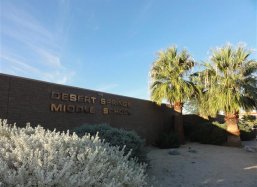
Desert Springs Middle School Pipe Canyon Project
Raymond Cree Middle School - Whitewater Restoration Project
Desert HotSprings High School - Dos Palmas Oasis Project
Palm Springs High School - Whitewater Land Reserve
San Isidro Ski Resort in Spain
This video below shows the plantation of trees in rocks. The plantation is in San Isidro ski resort Spain. The planting is above the tree line. The tree line in San Isidro is at 1,800 meters (6000 feet). In winter there is one to two meters of snow on Waterboxxes and their the saplings. The Groasis Waterboxx protects them well. Over 90% of the trees survive. The other kool things is that both mycorrhizal inoculation and companion planting of different trees and shrubs is discussed. The idea is to increase protection from avalanche potential.


The nasty rugged terrain and soil conditions remains me of many of the regions I come from in the San Jacinto Mountains above Palm Springs California.
Image - Groasis.com

Image - Groasis.com

Image - Groasis.com
There are lots more things to talk and discuss, but the website is a treasure trove of many other ideas, techniques and successful restoration programs going on around the globe. Click on their website and learn more. I merely tried putting things in logical order and touched on some scientific research here and there which back up some of the ideas they have which even they may not be aware of. Just one more word on subterranean water and plant's preference for this type of water. I've written about this before because of my fascination with hydrological minerotrophic systems. Todd Dawson has spent massive amounts of time research hydraulic lift and redistribution. Here is a link to a post I did and research he did on findings of streamside trees hydrating themselves from deep subsoil layers as opposed to surface waters.
Todd Dawson's Lab - Streamside Trees that do not utilize Streamside Surface Water
Recent Related posts I've published this week associated with Groasis Technology, Companion Planting, Mycorrhizal Fungi, and Habitat Restoration in remote locations
Positive Interactions and Mutual Dependence between two Desert Plants
How to Biomimic Nature's Companion Planting & the Reasons You Should
Is it safe to plant & water California Natives Plants in Summer ?
Some Further Important & Interesting Research References

Researchgate Report: the Groasis waterboxx © - La Primavera Agricultural Cooperative - Italy
Groasis Waterboxx Main Youtube page
Groasis Vegetables & Mycorrhizae - Video Library