Showing posts with label Habitat Restoration. Show all posts

Saturday, October 1, 2016

Tardigrades: pioneers in creating a new Earth ?

I've always thought that if ever I got hold of some land again for home & plant ecosystem development, I'd choose a blank canvas one!
 images and content © by Shuwen Lisa Wu

http://www.shuwenwu.com - Borrego Badlands - San Diego County
The view above is a photograph taken by Shuwen Lisa Wu who has a passion for taking beautiful photograph landscapes. Her husband Alexander Kunz is likewise a very talented landscape photographer. I really like this one because it's a scene I've admired from many angles most of my adult life when exploring Anza Borrego. The view is from the Borrego Badlands towards what looks to be the Fish Creek Mountains with Whale Peak to the right. This is also where the Plaster City Gypsum Mine is located along the canyon bottom of Fish Creek (which no longer has fish). Beyond here is Imperial Valley farmland with Salton Sea on the left hand side in the distance. Then just in the distance on the lower horizon before the farmland are the low rise of sandy mesquite dunes of Superstition hills if you know here to look. Still, this landscape looks to be a challenge not only for humans, but even for nature to reclaim and rebuild with regards whole plant ecosystems. What intrigues me about this area is that much of the signage and literature describing the origins of these corrugated hills is that the material is not native soil from the Mountains that tower over them from the west, nor coastal California, but rather material scoured from the Grand Canyon itself. Even the tops of these mountains north of the town of Ococtillo have a plethora of different sea shell. Thiis is clearly something that ancient freshwater Lake Cahuilla never put there. But that's for another story. I mainly posted the photo for the challenge it would take to encourage and create a combination native desert-subtropical landscape which could transform such a bare geological pattern into something all other  life could thrive in. But then suddenly the other day, I saw this article in the online journal VOX in the news feed about a cute little microscopic critter called the Tadigrade
VOX: Tardigrades — the microscopic, oddly cute toughest animals on Earth — explained

Credit: Eye of Science/SPL)

A tardigrade (Macrobiotus sapiens)
They are also known by a common name of Water Bears. Here are some of the main points (there are six main points), which I'll list, but mostly expand on point #3. Here is the first one.
1) First things first: Tardigrades are uncannily cute
My comment, 'Yes they are' now lets move on. You can read the further details from the link above.
2) Tardigrades can transform into tuns — allowing them to survive just about anywhere
Definitely an interesting section. Found absolutely everywhere through the Earth in every ecosystem. Tough buggers to kill, but that's a good thing as they are important to our planet's health. They have been burned, frozen, drowned, starved, subjected to lack of water and even nuked in outspace and they still survived.
animation - wallippo.com

Yes, tough buggers to Nuke even in Outerspace
#3) Tardigrades are often the first to pioneer new ecosystems
Source VOX: Tardigrades — the microscopic, oddly cute toughest animals on Earth
"Byron Adams, a Brigham Young University biologist, explains that tardigrades often are the first to colonize new, harsh environments. They act as the founding links in food chains."   
An example: "When a volcano erupts, and molten lava pours over everything in the ecosystem, everything in that ecosystem is dead," he writes in an email. "Tardigrades are among the very first multicellular animals to colonize. The tardigrades feed on the microbes that live in this environment. The tardigrades, in turn, accumulate the essential elements for life — such as nitrogen, carbon, and phosphorus -- that then allowplants and other life forms to move in." 
And that's always fascinated me. How does life moved back into areas which have been totally obliterated ? I think it's safe to say that after a massive volcanic eruption, pretty much all life including microbes are toast. And yet life moves back in stages. But which comes first ? The last thing I ever thought of were Tadigrades or Water Bears. Yet from the VOX article's description they can withstand almost everything. Even a sanitized landscape created by volcanoes.

image - expedia.com

Hawaii Volcanoes National Park
"Adams has conducted fieldwork in Antarctica, studying how melting permafrost will impact the microscopic ecosystem there. Because tardigrades are ubiquitous, they're likely to play a role in how the Antarctic continent changes with a warming climate."   
"They set the stage for other organisms," Adams tells me on a static-filled phone call from Antarctica. "They created the niches in which other more complex organisms . . "
Yes they sure do set the stage for other life forms to move in. Even harsh desert climates like the one below in northern Sonora Mexico and Southwestern Arizona east of Yuma. Funny, I'm now picturing these guys laying dormant within the desert's biological soil crusts, just waiting for the right moment to do their job. But biological soil crusts are another one of those ecosystems which get no respect.

(Foto por Leonora Torres)

El Pinacate Biosphere Reserve - Sonora, Mexico
Not long ago I wrote an article about this area above called El Pinacate which is located southeast of Yuma Arizona and just across the border in Sonora, Mexico. The region is a National Park or Reserve in Mexico. It is a former explosive volcanic field where at one time the landscape was remolded into a sterile sanitized state. But things came back and do live here and more abundant things thrived here back in history as evidenced from Packrat middens found here. Things like Pinyon and Juniper trees. They are extinct from here today. But then there was a climate change and the Water Bears just have to wait. Here was that post that dealt with how Saguaros also benefit from Volcanic explosions which originate from clear around the other side of the globe.
Distant Volcano eruptions help Saguaro Nursery baby booms ?

image - greenme.it

What's left of Krakatoa Volcano whoch blew it's top  in 1883
One of the most spectacular displays of destruction and obliteration of all life came in 1883 on the larger island of Krakatoa in Indonesia. The island had the appearance of true sterility and yet life came back. No doubt Tadigrades or Water Bears went to work immediately in the restoration process before the obvious physical appearance of plants into the new ecosystem.

4) Tardigrades may be "stealing" survival secrets from other bacteria
Interesting quote here from the article in Vox. This goes a long way in explaining how these creatures engineer themselves to adapt into any environmental circumstances. This is hardly dumb luck based on copying errors, but rather brilliant programming:
"One of the most tantalizing possibilities is that tardigrades may take DNA from bacteria and other organisms — perhaps even acquiring new abilities in the process."   
"When tardigrades go into tun mode, Bartels explains, a bit of their DNA gets damaged. When they wake up, that DNA is stitched back together. What biologists are now investigating is whether foreign DNA from bacteria or other organisms can hitch along as the tardigrade DNA gets repaired."   
"If so, this may explain how tardigrades developed their remarkable survival skills —they essentially steal them from bacteria."
Again, this stuff is fascinating. (epigenetics) Viewing Nature from a engineered biological perspective makes it far easier the replicate as opposed to dumb luck and happenstance. Much of the present day technological innovation and land management practices have been based on grossly erroneous dogmatic beliefs such as "Survival of the Fittest." If this were untrue, our planet would not look the way it does presently. Science now knows (possibly too late) that various components (plants, animals, birds, fish, microbes, etc) are in reality mutualistic in survival cooperation with each other. Man's inhumanity to fellow man centuries prior to this discipline called "Science" actually coloured how the natural world was viewed 100+ years ago. I really don't think most people understand how degenerative flawed human thinking and conduct was when creating the institution of Science and Academia. Over a century of this so-called enlightenment and look where our planet is today. Can you imagine the different turn out of events if real biomimicry was undertaken back before the industrial revolution ? 
4) Just about anyone can discover new tardigrade species

Yes, apparently anyone can do this. Their common habitat is mosses and lichens. Hmmm, this makes me think of Desert Biological Soil Crusts and dormant Tadigrades just waiting to go to work.             

 (See: Biological Soil Crusts: What Are They and Why Should I Care ?)                  

Carleton College has a handy field guide to help greenhorns find tardigrades. Just six easy steps!
1. Collect a clump of moss or lichen (dry or wet) and place in a shallow dish, such as a Petri dish.   
2. Soak in water (preferably rainwater or distilled water) for 3-24 hours.   
3. Remove and discard excess water from the dish.   
4. Shake or squeeze the moss/lichen clumps over another transparent dish to collect trapped water.   
5. Starting on a low objective lens, examine the water using a stereo microscope.   
6. Use a micropipette to transfer tardigrades to a slide, which can be observed with a higher power under a compound microscope.
(Source & Very Kool Link)
6) Did we mention they're oddly cute?
Yes you did. Now let's move along.
=========================================
Some concluding reflection & various other Comments
photo by Terry Weiner - Desert Protective Council

 Slot Canyons in Calcite Mine Area of the Desert Cahuilla Area
See this photo above ? I once made a comment under the post on the Desert Protective Council's Facebook page about creating a green living desert landscape in such places which are usually nothing more than sand rock & mud. I got hammered by the Admin of that page and her followers who took offense to what they believed was my attempt at interfering with Nature. That was never my point at all. On most social media sites, people don't often read another person's entire response or even ask you to clarify what you meant. Sometimes I think people on social media are looking for an excuse to display self-righteous indignation or some sort of emotional outrage. But seriously, below here is the exact conversation which took place in 2012 and you can google it on the Desert Protective Council Facebook page. 
"Some people see a wasteland. I see potential . . "
 Admin Response:
"Timeless, we should talk off-line! TW"
Other member response:
"Timeless, that attitude worries me. Raw nature doesn't need 'improvement'. They ARE wildlife paradises for the organisms that live there."
Once again, I did attempt to give a further explanation of what I actually meant. I assumed they thought I was talking human development. I wasn't. Unfortunately the explanation was ignored as there were no further comments. This is a common attitude and behaviour these days with many in the environmental movement who view being eccentric and easily offended as a badge of honor. I seriously don't get this behaviour. Being overly sensitive over every little thing said and taking offense over trivial viewponts are the new abnormal in our world now. This narrow minded tunnel vision reminds me of something Paul Newman's character, "Butch Cassidy," said to Robert Redford's character, "Sundance Kid." Remember this line & the scene where they were riding back to their hide out, "Hole in the Wall" ???:


image - pinterest.com
That always was an awesome line. If you recall, Newman's character Butch wasn’t exactly the toughest guy in the 'Hole in the Wall Gang" [think Logan], and he wasn't even the fastest gun either [think Sundance], but like Robert Redford (Sundance) responded, “You just keep thinkin’, Butch. That’s what you’re good at.” And he was right, Butch always seemed to manage to out-think almost everyone else around him, and that was what gave him the edge in his keeping his leadership. Frankly, I'm not an owner of a much coveted credentialed title before my name, nor do I have alphabet soup initials (PhD, BS, MS, etc) after my name on some business card. Nope, I'm not credentialed and I'm proud of that. But I've been intrigued most of my life since the early 1960s on how nature really works and what biological mechanisms make nature succeed against sseemingly impossible  odds. That's my answer to the conventional science promoting critics. My response to critics is similar to how Butch took care of Logan by outsmarting him by not playing on his level. Well, figuratively speaking of course..

image: Arizona Geologist, Wayne Ranne

The photograph above was taken in India by Northern Arizona Geologist, Wayne Ranne. The trees are many species of Acacia and one species of native Mesquite tree from India. I even referenced this Sand Dune Acacia woodland in my post on my biomimicry concept of replacing non-native and invasive Tamarisk Windbreaks with real world right in front of you (bite you if it were a rattlesnake) natural barriers commonly found in the Imperial County deserts. The post was about (Mesquite Dune Project) in which physical soil and rock structures could be built and planted with countless varieties of southwestern native desert trees like Palo Verde, Desert Ironwood, Mesquite, pockets of California Fan Palms here and there. Can you imagine the mile after mile windbreak baarriers comprised of living native desert whole plant ecosystems not only helping keep nature intact, but acting as real world physical barriers which prevent agricultural field desiccation on a massive scale which would save water ? Not to mention these deeply rooted (meters deep) native desert trees would never need irrigation.
Update March 26, 2017 TED Ed


Can you imagine if I were to suggest rebuilding desert plant ecosystems on the backs of the eastern Imperial Valley, Algodone Dunes ? The Desert Protective Council would hold a public hanging in Glamis. Okay, just kidding! The only thing I could figure was that they were thinking I wanted to develop something like the Palm Springs type of construction setting below. Puleeeze, that would be the last thing I'd want or ever do. There's way too much of that now.

Image - Conestoga Golf Club 

But the dream of having a landscape as a blank canvas is still so appealing to me. The idea of starting from scratch and building slowly along with just enough knowledge and information on various step by step biological mechanisms and just enough tweaking here and there to reasonably speed things along responsibly. I've never pointed this out before, but the theme of this blog, "Earth's Internet," is not exactly the internet address I chose. Notice what the address bar says up above here ? "Creating a New Earth" followed by blogspot.com. That is taken from a biblical text at Isaiah 65:17 which I always found refreshing:
"I’m creating new heavens and a new earth. All the earlier troubles, chaos, and pain are things of the past, to be forgotten."
Most people who claim to be Christian do not even believe in the above text. From talking to many, they believe their creator of the Earth is going to destroy it in a firey apocalypse. Apparently their hope is some other deminsion of space and time called Heaven. I've never really had a desire to go to such a place. No offesnse. I've always loved the Earth and the natural things in it. The idea of living on such a wonderful planet [minus all the insaneness of human leadership and social unrrest at present], has always appealed to me far more. Now on an interesting nore, there are many other famous well known biblical texts which are not respected either by those who claim to believe in the Bible's content. Take another example from Isaiah 2:4. Seriously, how many of you reading here actually knew that this very well known text is on a monument wall outside the United Nations building under a very famous statue:
"Then they will beat their swords into iron plows     and their spears into pruning tools. Nation will not take up sword against nation; they will no longer learn how to make war."
Image - Lotus Edtions

Image - un.org
You should know that this, "Let Us Beat Swords into Plowshares" statue was sculpted by Yevgeny Vuchetich. It was donated to the UN by of all ideologies, the USSR in 1959. The sculpture stands in the garden of the UN headquarters.   Now, you all know I'm right on this. Can anyone reading actually name one single country on Earth that does follow this biblical admonition ? Not only are there no religious countries who do, but also not one single secular atheistic country who practices this other than the proverbial lip service. Seriously folks, don't tell me about how both Switzerland or Sweden have always been on the neutral sidelines. Nobody historically has ever been truly neutral. Now let's fast forward to the present. Does anybody really want to actually remember and embrace the year 2016, let alone the coming year 2017 ??? In all my 60 years of life I've never seen such an insane crazy year as this on every conceivable level. Socially, politically, religiously, economically, and environmentally things are headed towards ruin by human beings from every single culture, not God.

FreakingNews.com

So has anybody seen one single mighty nation take even one of their Aircraft Carriers and turn it into a Golf Course ??? Yeah, me neither. In 1982 I moved from the San Diego area to a high mountain valley called Anza which is just north of this Borrego Badlands area. I loved this rugged area of beauty. It use to be more beautiful. Not only from a standpoint of my research of historical first hand accounts written in journals 100s of years ago, but even in my own lifetime experience. Over time I've particularly watch entire whole plant ecosystems completely disappear from Borrego. I suppose the other appeal was the lack of other humans in such areas. Can you imagine what Juan Bautista de Anza and Fray Pedro Font would say if they could eyewitness the dramatic changes of today in contrast to the pristine wild landscape they both described back in 1775-76 ?

image by Arno Gourdol (Dec 22, 2008)
Borrego badlands from Font's Point
Yeah, I still want my blank Canvas. Tardigrades are clearly  just another piece of the puzzle in accomplishing an earthwide rebuild. But I think I'll take my time in making changes ever so gradually. After all, that's what makes the idea and promise of living forever so appealing. I will admit one additional construct on my blank canvas. Remember the Faux Van Damme house in that Alfred Hitchcock film "North By Northwest" ? I'd somehow incorporate that into my landscaped setting. Seriously, I've always loved that house's design even though the place was never real and only part of a movie set. Maybe Frank Lloyd Wright would help me when he comes back ? *smile*
Image - hookedonhouses.net
 =======================================
Further reference reading on Tadigrades
VOX: Tardigrades — the microscopic, oddly cute toughest animals on Earth — explained

http://tardigrade.weebly.com/facts.html

Articles I've written on the area above called San Felipe Creek which has slowly crept towards balnds status

Anyone Really into Using Google Earth ? San Felipe Creek (2013) 

Scissors Crossing & San Felipe Creek Revisited (2014)

List of posts about the Spanish Expedition as authored by Juan Bautista de Anza & Fray Pedro Font
I'll ponder posting these. But for now there is plenty of material to read 


Tuesday, June 28, 2016

Groasis Waterboxx: Desert Greening, Root Infrastructure Development, Water Savings, Teaching Kids Nature, etc, etc, etc

The Groasis-Waterboxx is a device designed to help grow trees in dry areas. It was invented and developed by Dutch former flower exporter Pieter Hoff, and who won the Popular Science Green Tech Best of What's New Innovation of the year award for 2010.

image - NotCot

Plants on Life-Support
I've never used these Groasis Waterboxx products, but more and more I'm intrigued as I've stumbled across videos, articles and testimonials as to their effectiveness in dryland plant establishment. While the advent of drip irrigation brought hope for saving massive amounts of water and preventing  waste, my dislike for drip systems as a dominant solution practiced by most all professionals came from having the primary responsibility of the maintenance of the system as a landscape supervisor. The various emitter heads easily clogged as a result of the SoCal municipal water loaded with chlorine and it's high mineral content. Not to mention insect intrusion and wildlife desperately chewing and biting the plastic lines in search of a drink. Also,  I've found that many plants become too much dependent on dripsystems and would not mature unless weaned off early and gradually. Many commercial and homeowner urban landscapes have had plants on drip systems for for so many years that basically they are on a life-support system. Disconnect and they do not have the underground infrastructure to survive without it. So training plants as opposed to making them technology dependent interested me more and more. The other drawback with dripsystem maintenance is that the water is always present on the surface which creates damp opportunities for weed seeds to germinate. Mulch helps, but I always wanted to encourage my plants to develop deeper rootsystems into subterranean layers of the earth. This ensures better survival rates, plant vigor and health during the hotter months of the year. Here is what the device looks like.

Image - Goasis-Waterboxx
From the description at the groasis.com website, the waterboxx is quite simply a round device made from polypropylene. The device has a diameter of 20”and is 10” high – about the size of a car tire. The waterboxx holds 16 liters (4 gallons) of water and 75mm (3 inches) of rain is sufficient to fill it 100%. And believe it or not, one box filled with water is enough for an entire year. The waterboxx cocoon is designed to capture both rainwater and dew condensation, which collects in the chamber underneath the cover, and the internal mechanisms prevents the water from evaporating. The cover also helps produce condensation and captures the water by a process of physics. You can plant one or two plants/seeds in the open center pipe sleave in the soil. The water enters the box through the two openings and also the cap can be used to refill if necessary. They have designed optional wind protectors which can be attached if you have an area with strong winds. 

Notice the illustration below of those two pipes which function as a type of siphon and at the same time prevents water in the box from evaporating. There are one or two wicks inside the container on the bottom which then externally tap into the ground beneath the box and drips a small amount of water to the plant daily. After about a year the plants roots should have grown deep enough to reach a subsoil water source on its own (perhaps several feet or meters below ground) you can then remove the box and the plant should thrive on its own. You can reuse the waterboxx multiple times, but the wick must be replaced. 
Image - Groasis.com

This concept biomimics nature in that it forces plant roots to penetrate deeper into the subsoil layers as you can see in the illustration below. Water's movement is dictated by the downward pull of gravity and very little will move horizonally if the soil conditions are right. Even in rocky soils, the water will find the easiest way of penetrating downwards through cracks for which roots will follow. Interestly, some good scientific research has discovered that plant roots actually have a sensory system which will detect the presence of misture, then track water and growing in that direction. Researchers discovered this and published studies back in 2014. They also discovered that providing synthetic fertilizers at planting time in the hole (common science-based planting recommendations practiced by conventional commercial industries) hindered the ability of the plant to develop proper rooting structure. When you find time, follow this link below the illustration here:


Water provides a Hydropatterning Blueprint for Rooting Architecture & "Infrastructure"

The concept of this Groasis Waterboxx is to biomimic Nature, which doesn´t plant trees and shrubs, but rather but sows seed, by means of birds and animals, on top of the soil. Their manure functions as a type pf protective cover so that a capillary column (humidity column) can develop inside the soil. The seed germinates, develops its root in the capillary column and once water is found deeper in the soil, the leaves will develop and evaporation and photosynthesis can start. The problem is not growing trees on rocky soils or in sandy deserts, but planting and germinating and then bringing the tree through the planting period until it has grown enough to get water from the soil's capillary pore structure on its own. This is the what & how the Groasis Waterboxx apparently solves with these problems.


Image - Kevin Franck
You need to understand though what Peter Hoff is talking about when he often references capillary pore structure of soils. Interestingly I experimented with an easy to understand capillary action with an old fashioned traditional glass jar and papertowel project (often used in elementary schools) and a seed from a Catsclaw Acacia (Acacia greggii). The capillary action allowed water to travel upwards through the fibers of the papertowel which lined the outer edges of the glass jar with a couple of inches of water on the bottom of this tall jar. Much like the one I did with several different desert seeds to the right here in 2013. In my 1970s experiment, the Acacia seed germinated and for a couple of weeks, a single white taproot immerged and grew straight downwards. At the bottom of the jar the root spun around the glass bottom several revolutions until finally it triggered top growth of a couple of leaves stems. Aside from the physics involved, the plant clearly had encoded programming instructing the roots to grow furiously fast to reach deeper layers of soil prior to sprouting the leaves. This encoded strategy within the plant's DNA no doubt insured the plant's survival in an otherwise inhospitable desert habitat. So again, the logic behind the waterboxx is to “copy” or replicate what Nature does with a seed when it develops its roots before the actual plant starts to grow above the ground by providing itself with water before the water begins to evaporate. When using the Groasis Waterboxx, the same principle applies here if planting a plant instead of a seed. It is therefore imperative that the tree must be as small as possible. The waterboxx does not disturb the soil and therefore maintains the existing capillary pore structure in the soil.


Recommended Seedling container size & notice
the Mycorrhizal Fungi ?

In all soil there is capillary water action happening, but as soon as the sun rises & shines on the soil the capillary dries up, the Groasis Waterboxx prevents this. Every place on earth has some rain season, even the middle of the Sahara, Sonoran, Mojave, Kalahari, Gobi deserts, etc, where the rain falls and evaporates within days and that is all the rainfall most of these places will receive for a very long time. Therefore the problem is not a lack of water but the rapid capture, storage and slow distribution of water over a period of time to the plants. The waterboxx captures this rainwater and distributes it via an ingenious stand-alone system which also  involves condensation. During the night the temperature of the surface drops lower than the surrounding air due to radiation. Due to the temperature difference between the surface of the waterboxx and the air, the air surrounding the waterboxx is cooled below the dew point and the air condenses at the surface of the waterboxx, forming droplets. The waterboxx’s design not only collects dew but enhances the generation of condensation on a daily basis. This water produced is produced and collected by means of physics is then utilized in small daily dosages throughout the year. To avoid evaporation, the waterboxx cover encloses the tree, therefore neither the capillary nor the distributed water dry out.  The buffer in the Groasis Waterboxx functions as an equalizer of the soil. It avoids extreme temperatures and stimulates the root growth. Here is a video they have created to explain how the system works in replication of nature.
(Word of caution. I'm not a fan of the music they use, so turn the volume low on youtube. I would have preferred a narrator. However it's still educational with the text provided)

Recommended Planting Techniques
Image: Ziska Childs
The beauty of using this Groasis Waterboxx is that they encourage and advise starting with seeds, young vegetables, flowering plants, and young trees. The one of the things I love about their recommendation as far as size is something I have always practiced and advised. Use only one gallon or less. However their advice is not one gallon plants which may still have some root spinning in the container, but rather plants grown in elongated tubes with very young seedlings as shown in the photo at the left in the five gallon bucket. Or you can plant a seed such as emerging seedling germination as seen below with it's tap root at about a quarter inch long. But notice also the young plant in the second photo below the two oak acorns. This would be incredibly effective with bareroot planting projects for forest restorations. 


Images - Groasis.com
When it comes to traditional Forestry or Timber company restoration projects, massive amounts of trees are planted with the expectation that a large percentage with not make it leaving only the lucky few. With such a system as this you could increase survival rates close to 100%. The little chart figure below is desert survival when using their Waterboxx and not using their waterboxx. Think of how high the survival rates would be in chaparral or forest ecosystems if habitat restoration techniques employed this product.

Image - Groasis.com
For best results, they recommend that your plants selected plants should be native to the area you are planting. To make the right choice before planting, you would need to look around the area and take note of the oldest species that are thriving. These are the species that should be planted in the area. Once the species are chosen the planting process would be simple. If you use a capillary drill like the one recommended by Goasis, clean the top layer of the soil by cutting away the weeds, but they insist you not get into the soil or pull the weeds – in other words you don’t want to destroy the natural capillary structure of the soil pores. Dig the small planting hole, approximately 5 inches (10 cm) deep and 4 inches (8 cm) wide. Then put the seedling or sapling with the tree’s roots in the hole and fill the rest with potting soil while pushing towards the roots. Pour a few liters of water through the open center of the Groasis Waterboxx, and ensure the tree and its root make good contact with the soil. Now you can place the Groasis Waterboxx on top of it without its top, place stones in the Groasis Waterboxx to prevent it from being blown away. Continue to add water until it overflows and then place the top on the waterboxx and carefully close it to avoid unnecessary evaporation. Add the two tubes in the top openings and add some extra water on top which will go into the open center of the waterboxx allowing for the soil under the box to remain humid.
Plant instructions for the Groasis Technology
Incorporating Mycorrhizal Fungi and NO FERTILIZER (Synthetic or Organic) at time of outplanting is imperative  (My Own Opinion)

As many here reading this blog know, I am adamantly pro-mycorrhizal and almost zero fertilizers. Mt preferred brand in the United States is Mycorrhizal Application Inc's products under the MycoApply label. Interestingly, on my last visit I contacted PHC's distributor, Lebanon Turf , for all Plant Health Care Inc's products which I used in the past, but they informed me last month when visiting my mother in California that the State did not allow their products inside of California. I was actually looking to test their PHC Tree Saver product (which is mostly P.T. Mycorrhizal spores), but it never happened. No matter, the MycorrApply works great. I'm sure Europe has a collection of good brands available here. Below is a good video example on how dedicated the Groasis folks are to the strict use of mycorrhizal fungi. Below that I've provided a link to their entire mycorrhizal advice and testomonials Library:

Without listing all the videos on using Mycorrhizal Fungi along with the Groasis-Waterboxx, here is one of their Youtube accounts called Groasis Vegetables which contains the entire series of tutortorials of incorporating fungi & beneficial bacteria with the plants
Groasis Vegetables & Mycorrhizae - Video Library
~~~~~~~~~~~~~~~~~~~~~~~~~~~~~~
Is it possible to use one gallon container Shrubs/Trees with the Groasis Waterboxx Cocoon ??? 
Most certainly, but you'll have to do a bit of plant root pruning prep to make sure the tree or shrub will form a proper deep rooting infrastructure which is ultimately the goal here. This video below is an excellent ilustration of what to do with container nursery grown plants prior to planting where the root system has a spin around problem. I've used this technique without using the Groasis Waterboxx for decades now and it does not hurt the plant. It simply encourages resprouting  in a downwards movement as you will see with a Mango tree where after 20 days has put on straight downwards growing roots 80 inches deep into the subsoil. Wonderful testomonial video on just how quickly and deeply the root systems are encouraged to grow.


Some Reading References on Perfect Root Infrastructure
How to create the perfect tree: We teach you how to repair destroyed primary roots 
Groasis Waterboxx Removal after one Year
After about one year the plant primary roots should have grown deep enough to reach the underground water and have become strong enough to survive without the help of the waterboxx. This stage becomes evident when the trees exhibit a strong growth phase. When this happens, the polypropylene waterboxx can be removed and used for a new planting. The claim by Groasis is that the polypropylene waterboxx can be reused 15 to 20 more times. This lessens the cost of the box over time. If you haved used model that has a double opening for two or three plants, and more than one plant has suvived, this is also the time to cut the weakest of the plants and leave the strongest one to grow. Below is one of two Groasis Biodegradable Plant Cocoons. The one below is for "Orchard and Garden" while the other which you'll see in a link I'll provide below of both is to be used in remote outplanting projects like "Reforestation and Habitat Restoration" projects. 


Image - Groasis Waterboxx
Introduction of the Growboxx plantcocoon®
~~~~~~~~~~~~~~~~~~~~~~~~~~~~
Some Groasis Waterboxx Success Stories & their are hundreds, but here are just a few

Image - Groasis-Waterboxx

Sequoia gigantea (Sierra Redwood)
DewHarvest: Sequoia Progress in Indiana with the Groasis Waterboxx

Image - Groasis Waterboxx
This is an Anti-Desertification Project in Kuwait where the plants on the left were drip irrigation and on the right grown with the Groasis Waterboxx Cocoons
http://www.kuwait-oasis.com/Groasis-technology
Coachella Valley Habitat Restroation Projects and teaching School kids
Image - Groasis.com
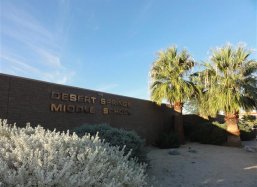
Desert Springs Middle School Pipe Canyon Project
Raymond Cree Middle School - Whitewater Restoration Project
Desert HotSprings High School - Dos Palmas Oasis Project
Palm Springs High School - Whitewater Land Reserve
San Isidro Ski Resort in Spain
This video below shows the plantation of trees in rocks. The plantation is in San Isidro ski resort Spain. The planting is above the tree line. The tree line in San Isidro is at 1,800 meters (6000 feet). In winter there is one to two meters of snow on Waterboxxes and their the saplings. The Groasis Waterboxx protects them well. Over 90% of the trees survive. The other kool things is that both mycorrhizal inoculation and companion planting of different trees and shrubs is discussed. The idea is to increase protection from avalanche potential.


The nasty rugged terrain and soil conditions remains me of many of the regions I come from in the San Jacinto Mountains above Palm Springs California.
Image - Groasis.com

Image - Groasis.com

Image - Groasis.com
There are lots more things to talk and discuss, but the website is a treasure trove of many other ideas, techniques and successful restoration programs going on around the globe. Click on their website and learn more. I merely tried putting things in logical order and touched on some scientific research here and there which back up some of the ideas they have which even they may not be aware of. Just one more word on subterranean water and plant's preference for this type of water. I've written about this before because of my fascination with hydrological minerotrophic systems. Todd Dawson has spent massive amounts of time research hydraulic lift and redistribution. Here is a link to a post I did and research he did on findings of streamside trees hydrating themselves from deep subsoil layers as opposed to surface waters.
Todd Dawson's Lab - Streamside Trees that do not utilize Streamside Surface Water
Recent Related posts I've published this week associated with Groasis Technology, Companion Planting, Mycorrhizal Fungi, and Habitat Restoration in remote locations
Positive Interactions and Mutual Dependence between two Desert Plants
How to Biomimic Nature's Companion Planting & the Reasons You Should
Is it safe to plant & water California Natives Plants in Summer ?
Some Further Important & Interesting Research References

Researchgate Report: the Groasis waterboxx © - La Primavera Agricultural Cooperative - Italy
Groasis Waterboxx Main Youtube page
Groasis Vegetables & Mycorrhizae - Video Library


Wednesday, June 4, 2014

Getting to the Root of why Natives rule & Exotics struggle or outright fail

For those particularly interested in Landscapes in the Southwest, you need to seriously pay attention
animation: Beatrice the Biologist
Whenever I am out anywhere in Nature, I am often intrigued with the natural underground networks which I believe make the beauty above ground all possible. Although usually unseen, I know there is something more going on with a luxuriant Chaparral shrub, especially when it first off appears to the eye to be in an impossible hot dry setting. In any event, it's always in the back of my mind and when I stumble upon a prime example while exploring, I record the scene straight away. I did recently stumble across these exact circumstances last week as my wife and I revisited Torrey Pines State Reserve between  Del Mar and La Jolla California. While walking the Park road back to Visitor Lodge from the Guy Flemming Trail, I noticed along the road cut out where the bank was crumbling and fractured rock debris was falling down to the road, there were numerous chaparral plant roots exposed as a result. This sand stone here looks to be a fairly dense impenetrable material where even water would merely run off the surface rather than percolate. Yet there they were, the cracks and fractures underneath being exploited by the plant's root system. It brought back to mind something that was reported on in a recent article and which I wrote about (Here) with the importance of plant roots being able to open up not only the surface ground layers, but also the sub-soils which further allows water percolation and deeper earth penetration by means of hydraulic descent. If course they exploit the hidden cracks and crevices with the Earth through their spiral drilling mechanisms. Take a look at three interesting photographs I took at Torrey Pines State Reserve which illustrate the intense natural engineering lengths at which California Chaparral species will take in order to survive.


Image: Torrey Pines State Reserve Park Rd


image: Torrey Pines State Preserve Park Rd


image: Torrey Pines State Reserve Park Rd


I was also further amazed by something I found regarding California Fan Palms this past weekend west of Ocotillo California in a canyon between Dos Cabezas Springs and Mortero Palms Oasis. To be honest, I never really paid much attention when it came to Fan Palm root structure and viewed their network as something which never strayed far from the tree. I mean after all, they always seem to be located near springs or seeps which run close to the surface. But I again stumbled upon something interesting again and in a location most hikers normally avoid or pay little attention to. The parking area for setting out on the long strenuous hike to Mortero Palms Oasis is in a separate canyon from that of the Oasis, but up that canyon there 5 or 6 good medium sized California Fan Palms along with smaller ones. There does also exist an older fallen log of a grand daddy which I can tell you has been there for years. The dry hot desert air tends to mummify wooden things in a sort of preservation phenomena. But aside from the usual placement of the odd palm here and there, it was the root system with in the area's fractured granite rock strata which actually caught my eye. First off, there was this one interesting fan Palm which was the first palm you come to climbing up the wash. Everything looked pretty much normal until you squeezed around to the back behind it. This is where I started paying attention once again to the ground and the network of root systems. Take a look at the photo below here where all is not what it seems from a visual perspective
This California Fan Palm was intriguing for one particular reason. I actually had to squeeze by this granite boulder here where I saw an interesting growth anomaly which took place decades back history where flood waters had knocked this tree down flat on the wash bottom as a youth, but through gravitropism it was able thereafter to right itself back up where from a frontal view looks perfectly normal and opposite in the back door. Nothing out in the wild can be attributed to ideal conditions. Everything is a tough struggle with some slight ideal conditions which allow for the success and survival. Of course in the urban landscape, things can be ideal, but understanding the mechanisms by which things succeed out in the wild will enable you to establish a landscape which will be more likely to flourish on it's own, especially during times of water availability and uncertainty. This is the goal that should be sought after anyway under any conditions. A landscape developed and maintained on a life support scenario, otherwise known as welfare, will not survive such tough times. The degradation of 75% of Southern California yards is proof that something has to change.
For the moment, take a look at this Fan Palm to the right. This tree was at the top of a rocky outcropping higher in the wash with it's roots extending downwards and also broadly running in a side pattern horizontally almost 15 feet away from the base of the tree. As solid as the granite bedrock was, it had numerous fracture lines running vertically as well as horizontally. This is where these delicate, yet tough fan palm roots found a conduit channel for seeking out further water seepage. I never though the roots ever went that far away from the tree and actually they went further beyond down the wash, but these pictures are of what I could verify on the surface. I have no real idea of how deep a setting the Fan Palm roots will venture. It would seem however they may go some feet in deep sandy wash type soils where aeration is exceptional. Given their presence in washes with regular flash flooding and debris sediment movements, I have seen some which have been buried far above their normal root line. Also there is the fact that many in a sheltered landscape setting, as they age and mature do start showing the protrusion of roots growing down from the trunk a foot or two above the ground level higher up on the trunk base. So who knows what the possibilities of actual depth with which could be obtained by these trees as long as there is good healthy aeration.

image: Mine

PalmBob 2009
The photo above of the fan palm roots are about 12-15 foot at the bottom of the wash away from that tree above. The roots actually followed the cracks and fractures within the exposed granite bedrock and have been revealed by continual ongoing natural flooding within the wash. They actually proceed beyond this picture on the left to deep down inside the level sandy wash down stream to the right in the photo where the original large ancient palm trunk has fallen over. Although I didn't photograph them, there were also lateral roots which grew at great distance sideways across the wash to the other side, once again following the cracks in the bedrock. The other photo of a Mexican Fan Palm to the right is for illustrative purposes only. Older Palms develop roots a foot or two above the soil line where the bark splits and reveals root growth expansion which not only adds to it's water and nutrient uptake if it's successful in reaching the ground, but also adds a wider base for the strength of the larger tree as well. Under natural normal wild conditions, the palm frond skirting would hide these roots and protect them from the drying elements of the harsh sun, making it possible for them to expand all the way down into the soil. It's important in understanding how things actually work or have the potential to work out in Nature. Without practical application, for me none of this would be of any real value. This is important in understanding the physiology of any plant's growth, especially in later life and the geology of your own landscape and what can and cannot be planted and why or with what in a community planting. How does everything work and harmonize for the benefit of the other plants ? Which mycorrhizal applications should I use to further enhance the plant's ability to thrive in the landscape ? While I never thought it possible, recent research has uncovered that palms can be colonized by ecto-mycorrhizae and not just endo-mycorrhizae. This is an important find and one I'll share later in another post. It's incredible because one of my favourite fungi are mentioned as doing the colonization, Pisoliths tinctorius (Dog turd Fungus).

Below here is one final photo. This is the bottom of the canyon where the wash opens up and fans out in the alluvial plan. This is a specimen of Holly Leaf Cherry (Prunus ilicifolia). Most of you won't believe this, but this particular old chaparral plant was present in the late 1960s when I first ventured here as a Boy scout. It is also a fascinating phenomena considering it's placement in the wild landscape. This area is extremely hot and dry, often well over 100 F or 40+ C. It's root infrastructure is clearly tapped into a permanent water source. It's the only Holly Leaf Cherry I have ever found near here and mostly likely was placed here by means of Coyote scat as opposed to being washed downstream. The placement above the wash may support this. The main point here is this chaparral species and the giant Sugarbush (Rhus ovata) in the next wash over can succeed in harsh climates given access to regular water. This is why natives should be used more often in the landscapes where as time pants on to the end, survival is becoming more and more of an issue than at any time previously.


image: Mine
I've benefited tremendously from observation and replication of various plant community scenarios observed in Nature. Despite recent climate change and drought in California, I have been successful in three landscape examples I installed last year (2013) in the interior valleys and mountains of San Diego County. I'll reveal the photos and report on them later. Of course everything is native plants and respect for underground root infrastructure and the interconnections between plants of the same community. Sadly, many of my techniques I fear will not work in remote wild places without human intervention, as the ongoing climate shifting and drought have changed the rules. In the landscape however, you have more control and success can be easily achieved by respect for some basic fundamentals and principles. If the climate were to ever change by way of improvement, then the native landscape will also respond in kind. The genetic information and detailed instruction are still in place, just waiting for this to happen. Sadly, I also fear that this year Torrey Pines State Reserve could and will be lost to wildfire if circumstances don't change. The chaparral and pines up there look terrible. The chaparral in many areas hasn't put on new growth and is struggling to maintain what's left by shedding well over half their leaves. The pic below says it all.

image: Mine

The chaparral everywhere here was suffering terribly and sadly it will be blamed when a disastrous wildfire strikes and it will, trust me. This should also be a wake-up call to home owners whose landscapes are in horrible condition and I say this from first hand on the ground observation. While the incredible amazing root infrastructure is all still there and in existence within all the plant communities, it means nothing without a normal rainfall pattern coming back again.


image: Mine
There were many stressed Torrey Pines, especially on the highest points where annual needle bundles located along the yearly growth whorls were from this years growth and that of last year. Most healthy pines in general should have as far back as six year's needle growth still present. The fact that these trees here exhibited only two or three years at best proves the stress they are under as they eliminate what they are incapable of maintaining. Armed with this knowledge, folks should inspect their own home landscape and be observant to the tell tale signs of a weakening system within their landscape. This is one of the main problems with the recent San Marcos Fire last month where News Helicopters revealed many neglected stressed or outright dead trees in their landscape which caused a greater firestorm. Although the State Park by it's very rules won't allow trimming of branches and dead material, in the interest of the park as a whole, something of a maintenance plan should be devised. There should be a rethinking of all Park and Wilderness rules where the conditions of climate and ecosystem health under which those rules originally formulated do not any longer exist. The conditions and rules by which Nature once operated no longer exist and humankind changed the rules.

image: Mine


Further Reading Interest:
Old Growth Tree Roots are far far more than Nature's Climate Thermostat
How much Reverse Engineering of Earth happens before Humans Admit there's a Problem ?
Hydraulic Lift and Redistribution of Water for the Benefit of other Plants in San Diego County
Deep Irrigation Methods for Training Deeper Rooting networks
YouTube: Planting trees with "deep pipe" irrigation