|
Department of the Interior - Bureau of Reclamation
Glen Canyon Dam - Lake Powell Arizona |
A few days ago there was an article about research work which has been done revealing the destructive nature of the historic Human Dam building projects over the past 20th Century. The large poster child for this subject of course was the Grand Canyon, so I found it worth a re-post in some of it's parts, plus other issues regarding fresh water problems for the Western USA. Humans tend to want to do everything on a Grand Industrial Scale. The claim is made be human leadership that, "Well, we're simply replicating what Nature does out in the wild". Well, not quite. Nature generally can be found to build systems on thousands of small scale systems and in turn collectively entire ecosystems benefit for free. Humans do things on Grandiose Scales under the guise of "We just want to serve our fellow man", but where only a handful of individuals actually profit, and generally in terms of monetary worth and financial gain. Out in Nature, when there is an imbalance and one species of whatever organism takes completely over, the entire system suffers and eventually collapses the whole. Maybe humans should pay more to Nature's often humble small scale collective systems which when working together instead of against, benefits the whole. Industrial Scale Dams, Industrial Agriculture, etc are killing this planet. Here's the article from the Cary Institute of Ecosystem Studies |
Credit: Emma Rosi-Marshall
Humpback chub are a federally-protected endangered species |
The research team investigated food webs in the Grand Canyon Reach of the Colorado River. Study sites were distributed along a 240-mile stretch downstream of Glen Canyon Dam, which was completed in 1963 for water delivery and hydroelectric power needs. During the three-year study, samples of over 3,600 animal diets and 4,200 invertebrate populations were collected and processed. Among the team's findings: following an experimental flood, sites near the dam had the most dramatic changes in the structure and function of their food webs.
Dams destabilize river food webs: Lessons from the Grand Canyon Tuesday, August 20, 2013
 |
Drs. Wyatt Cross and Emma Rosi-Marshall
seining for fishes in the Grand Canyon |
(Millbrook, N.Y.) Managing fish in human-altered rivers is a challenge because their food webs are sensitive to environmental disturbance. So reports a new study in the journal Ecological Monographs, based on an exhaustive three-year analysis of the Colorado River in Glen and Grand Canyons.
Food webs are used to map feeding relationships. By describing the structure of these webs, scientists can predict how plants and animals living in an ecosystem will respond to change. Coauthor Dr. Emma Rosi-Marshall, an aquatic ecologist at the Cary Institute of Ecosystem Studies, comments, "Given the degraded state of the world's rivers, insight into food webs is essential to conserving endangered animals, improving water quality, and managing productive fisheries."
The project – which relied on a team of more than 10 researchers from the Cary Institute of Ecosystem Studies, Montana State University, Idaho State University, University of Wyoming, U.S. Geological Survey, and Loyola University of Chicago – assessed six sites on the Colorado River, many so remote they required two-week boat trips through the canyon.
Lead author Dr. Wyatt Cross of Montana State University comments, "Glen Canyon Dam has transformed the ecology of the Colorado River. Immediately downstream, cold, low-sediment waters have favored exotic plants and animals that haven't co-evolved with native species. We now see reduced biodiversity and novel species interactions that have led to the instability of these river food webs."
My interruption here:
Take a long look below at this peculiar looking fish which is actually a Colorado River native. This is a fish called the Humpback Chub which are a federally-protected endangered species. This is one of the fish whose skeletal remains have been found in and around the old Cahuilla Indian fish Traps along the ancient sea level line of Ancient Lake Cahuilla locted in the Coachella Valley. The ancient lake water was not like that of the present Salton Sea, but if not totally fresh, was at least brackish water where this and other Colorado Natives once thrived.

Near Glen Canyon Dam, the researchers found food webs dominated by invasive New Zealand mud snails and non-native rainbow trout, with large mismatches in the food web and only a small percentage of available invertebrates eaten by fish. In contrast, downstream food webs had more native fish species, and a less productive invertebrate fauna that was efficiently consumed by fish, including a federally-listed endangered species, the Humpback Chub.
In March of 2008, the Department of Interior conducted an experiment that simulated pre-dam flood conditions, providing an opportunity to see how high flows affected food webs with very different characteristics. Rosi-Marshall explains, "Food web stability increased with distance from Glen Canyon Dam, with downstream sites near tributaries proving the most resistant. At these locations, the flood didn't cause major changes in the structure of food webs or the productivity of species."
It was a different picture for sites near the dam. As co-author Dr. Colden Baxter, an aquatic ecologist with Idaho State University, notes, "These energy inefficient, simplified food webs experienced a major restructuring following the experimental flood." New Zealand mudsnails were drastically reduced. And changes in algal communities led to a rise in midges and blackflies – favored foods of trout – resulting in a near tripling of non-native rainbow trout numbers.
Rainbow trout, introduced below Glen Canyon Dam in the 1960s, support a valued recreational fishery. But when trout density increases upstream, and fish move downstream into Grand Canyon, they can compete with native fishes for limited food resources, sometimes preying upon juveniles.
 |
| Image: Bob D. burdick |
Biological Technician, Rick Smaniotto holds a 17 pound female Colorado Pikeminnow (formerly known as Colorado Squawfish). The Colorado Pikeminnow was once found throughout the Colorado drainage basin, in which it occurred in Arizona, California, Colorado, Nevada, New Mexico,Utah, and Wyoming, as well as in Mexico. Damming and habitat alterations have confined this fish to the upper Colorado drainage; currently, remnant populations are known from the Green River, Gunnison River, White River, San Juan River, and Yampa River. There are historical account records for catch size of these fish as being up to 6 ft (1.8 m) long and weighing over 100 pounds (45 kg). Arizona Historian Marshall Trimble referred to this reference in his description of their once historical presence in the San Pedro River in southern Arizona. More on this later. The Colorado pikeminnow was in the early days called "white salmon" and "Colorado salmon" by ealy settlers and also valued as a food and sport fish by both Indians and early pioneers.
Back to the Article on Grand Canyon Dams
"Understanding how and why high flows affect trout numbers is valuable information that decision makers can use to help manage and protect river resources," remarks Dr. Theodore Kennedy, project coordinator and a coauthor of the study with the U.S. Geological Survey's Grand Canyon Monitoring and Research Center.
Dr. Robert Hall, an ecologist at the University of Wyoming, notes, "While downstream food webs proved to be more stable in our study, they are clearly a shadow of pre-dam conditions. Four large native fishes have already been lost from the Grand Canyon reach of the Colorado River. And invertebrates that were once an important part of the food web, such as mayflies and net-spinning caddisflies, are conspicuously absent. "
Today, many ecosystems are like the Colorado River: an amalgam of native and non-native species living in human-altered habitat. The study's authors demonstrated that large-scale modifications, like dams, can have far-reaching effects on how energy flows through food webs, altering their stability and leading to less resilient ecosystems.
(Source)
With all that in mind, there are of course the original dam building engineers long before mankind was ever appeared on the Earth. Beavers! They have had the past misfortune of being trapped out for their fur and the consequences were soon felt as a result of their absence from Nature. Even with their re-introductions in many areas, there has still been some controversy as to presence and benefits coming from Cattle Ranchers. I actually believe cattle ranchers don't like any other animal than cattle. Prairie Dogs, Wolves, Coyotes, competing Bison, *cough-cough* - Sheep, etc. Did I miss any ? But seriously, why Beavers ? In a recent article from oregonlive.com
 |
| (RICHARD COCKLE/THE OREGONIAN) |
John Day ex-logger and ex-rancher, Loren Stout, inspects a beaver dam along Deer Creek in Grant County. The Oregon Department of Fish and Wildlife opened up at least one beaver dam along this busy tributary of the John Day River System last spring to enable migrating steelhead to pass. Biologists say beaver dams benefit fish, but low water made it impossible for steelhead to get past some dams. Stout claims he freed two 29-inch steelhead that became caught in a dam.
The controversy here with the Cattlemen mostly was about the effects beaver were having on their Salmon run population in streams running through their land. Never mind that the beaver in reality benefit the landscape with better grazing forage extending a large distance from the creek to nourish the grasses and other plants cattle eat. In their total ignorance, they just didn't like what they thought the beaver were doing to their Salmon. Back in the middle 1990s, I had a conversation with the Garner Valley Ranch Forman, Robert Houdeshell, who was from up north around the eastern Washington State area and now in Idaho if I remember properly, about studies being done on the benficial effects of beaver being reintroduced into Ranchlands. I don't remember the exact publication he showed me now, but the gist of it mentioned the benefits of a beaver dam's ability of slowing water way down and backing the water way up and spreading over a greater landscape behind it. It explained how the beaver's dung along with that of visiting waterfowl like Ducks and Geese have the effect of sealing the beaver pond's bottom, where instead of allowing the water to percolate deep down into the soil and under the dam headed only to make it's way down stream anyway, it actually forces the water to saturate the landscape in a sideways horizontal movement which benefits large riparian woodlands and meadows many many meters away from the main body of water course where cattle and other wildlife graze. The website, did their own critique of the article here: http://www.martinezbeavers.org , and you may click on that link and read. But I'll do my own take on the Cattlemen's talking points against the beaver and what I know of Trout survival in some San Jacinto Mountain locations which would seem impossible to the experts. First some of the talking points in The Oregonian article:
"We got reports from two or three members of the public that there were Steelhead stacked up below this beaver dam," explained ODFW biologist Jeff Neal of John Day. He blamed a disappointing winter snowpack and undersized springtime flows for making it impossible for threatened Steelhead Trout to get past the dam. The spring dam removal highlighted the complex and sometimes controversial role that beavers play in the lives of fish.
So the argument is, the beaver dams create barriers for migrating Steelheads especially during low flows. But some logical conclusions and observations made by the Biologists, are something anyone with any sense of education would understand about the ability of Steelhead to survive, migrate or whatever they choose to do.
Biologist Chris Jordan of the National Marine Fisheries Service, says a beaver dam like the one Stout pointed out on Deer Creek might pose problems for fish in late summer's low water. But steelhead aren't migrating on these streams in August. "Steelhead are amazing jumpers," says Jordan, who believes beaver and their dams improve aquatic habitat for fish. Migrating fish usually "can get around them or through them or over them," says Jimmy Taylor,a wildlife biologist with the U.S. Department of Agriculture's National Wildlife Research Center at Oregon State University.
Those are all logical conclusions and things most people also understand. They are amazing jumpers, they don't migrate in August, etc. Would a small beaver dam be an issue to such fish that are known for scaling waterfalls and swifter rapids ? But the other question is, were these dam removals actually necessary as insisted upon by the cattlemen ? Take a look at some of the excuses given for Steelhead Trout being bottled up behind a Beaver's Dam.
But ranchers like Stout and Stangle argue that summertime water in the pools behind dams turns warm under the sun's heat, which they say can't be good for Steelhead. "The holy grail of the Steelhead is the temperature of the water," said Stangel, adding that, "beaver aggravate that problem by gnawing down trees, alder and underbrush that otherwise would provide cooling shade."
 |
| Foster Lake Idyllwild Calfornia Postcard |
Here is what I know about Trout survival up in the San Jacinto Mountains. I'm talking about both Rainbow and German Brown Trout [which locals called the native, but not so, the name is probably a give away] which in many areas have naturalized. Just north of Idyllwild & before you come to Pine Cove on Hwy 243, there is a turn off to the Idyllwild Water District's water holding reservoir called Foster Lake which in the past was used by the public for picknicking, fishing and other recreational activities. Today, I believe it's closed.
In the early days of my living there, there was always plenty of water filled to the brim and often flowing over the spillway. The White Water Trout Hatchery regularly came up and release hatchery Trout at Lake Foster and other surrounding well hydrated watering holes for tourist fishing. During the entire time I was living there and right through the 1980s to 90s, there was always water, but not always enough to spill over the Dam's spillway down into what is called Lilly Creek. This creek flows down into Idyllwild Park where many may have visited the Nature Center there. This Park is rich in beautiful plant life as a result of traditionally being well hydrated from the Lilly Creek drainage up above. Now while that stream hasn't always flowed, it does have a few small deep pools which are well hidden to most people. It was at this creek location below the spillway at Foster Lake where we had friends purchase property and build a home on Foster Lake Rd above Hwy 243. One day another elderly friend came to visit this house and took my friend's son down to that creek which did have some flow to it, but not much. There were about 4 or 5 of these small but deep pools in boulders which always retained water. Now, this tiny Creek was never ever stocked with Trout. But we found trout there and each pool had a single trout which were huge, indicating that even if they had been hatchery trout released at Foster Lake, they had lived there for some years. No hatchery Trout are ever release at this size. They no doubt were trapped in these pools after being washed down the spillway at higher than normal flows during that El Nino period '78-83'. The point here is, they thrived and so would Steelhead behind a Beaver Dam thrive for a few months waiting for heavy flows.
 |
California @ AARoads
San Jacinto Main River Canyon |
Another example are the German Brown Trout living in the high country of Mount Jacinto State Park at high elevation. Not only me, but also Steve Raybould of the U.S. forest Service has seen these trout survive the end of the summer dry period where man streams had shrank down to no more than a long slender mud hole with warm cloudy water and the trout were still thriving. Another example is the always steady dependable deep pools in South fork Canyon of the San Jacinto River and up Strawberry Creek between north of Hwy 74 & Idyllwild's Grotto region. Deep pools which are spring or cieniga fed are always dependable water holes utilized by the naturalized trout as weigh stations until the winter and spring floods come through each season and as far as I know it has always been that way. I use to going down to the main boulder strewn canyon of the main channel of the San Jacinto River and German Browns could always be caught if you knew where to look in otherwise dry river rock cobblestone. Again, the point is, these trout survived much tougher conditions in a hot and often drier climate and geography, than some low flowing creek and Beaver Dam as the one referenced up in the State of Oregon. Now let's focus back on the Colorado River drainage and other tributaries which one had countless Beaver Dams.
 |
US Bureau of Reclamation
|
There is actually an older article from 1994 in the Tucson Citizen which highlights beaver reintroduction planning as part of the San Pedro River Restoration project which in many many ways has been a success. The Sonoran Beavers who built the Dams along the still in existence water courses through the arid Arizona southwest historically kept water within the riparian system which allowed even the large Colorado Pikeminnow (Squawfish) to be able to exist and be reported on by early settlers. This fish for the moment I don't believe is there, but no doubt be reintroduced. This is the river Marshall Trimble referenced as having large Colorado Squawfish which were between 3 and 5 foot long. Some parts of this once meandering back and forth river valley were channeled to allow settlement and farming on both side of the river. With the reintroduction of the native Sonoran Beaver once again creating a mosaic of river dams and backwater lakes, this river could once again create it's much more slowed down meandering back and forth structure which is what makes for prime wildlife habitat. Here are some pertinent quotes from that Tucson newspaper on the areas history of wildlife habitat of the San Pedro River Preserve:
Damaged San Pedro River healing again (1994)
"After the beavers are established, state and federal wildlife experts and public fans of this area hope larger birds of prey, native fish and maybe someday, just maybe, wolves will live here again."
SIDEBAR: Beaver return called benefit to river system
The “keystone’ species to the San Pedro River’s future is the beaver, says Arizona Game and Fish wildlife biologist Rick Gerhart.
Beavers once thrived along the river, but were trapped out in the mid- and late 1800s during the country’s obsession with making hats and coats out of the giant rodent’s pelt.
By building dams, beaver slow the flow of the river, allowing what water there is in the desert to spread out, sink in and form habitat for other animals and plants.
“It modifies the habitat to benefit other species,’ says Gerhart. “(Beaver) dams allow much wider perimeter of the stream. It spreads the wetted area, three to five times wider and wetter. Water seeps out gradually during dry periods. Perennial stream flow had been found to return when there are beaver.’
So wildlife experts are preparing to give Mother Nature another nudge.
Gerhart said, "beavers also create pools behind their dams that are perfect for some of Arizona’s threatened and endangered fish."
If all goes as planned, maybe as soon as next year, a few beaver – North America’s largest rodent (up to 4 feet long and 60 pounds) – will be reintroduced into the San Pedro."
Here is a 2012 Update on the Beavers along the San Pedro River
Reintroduced beavers branching out in San Pedro
Here's a great video of the reintroduction to the of the Sonoran Beavers to the San Pedro River system (2009):
Reintroduction of the Beaver to the San Pedro River of Southeastern Arizona
Here is a great video on the Oregon Beaver Reintroduction Programs: Oregon Field Guide: "Beaver Assisted Restoration"
 |
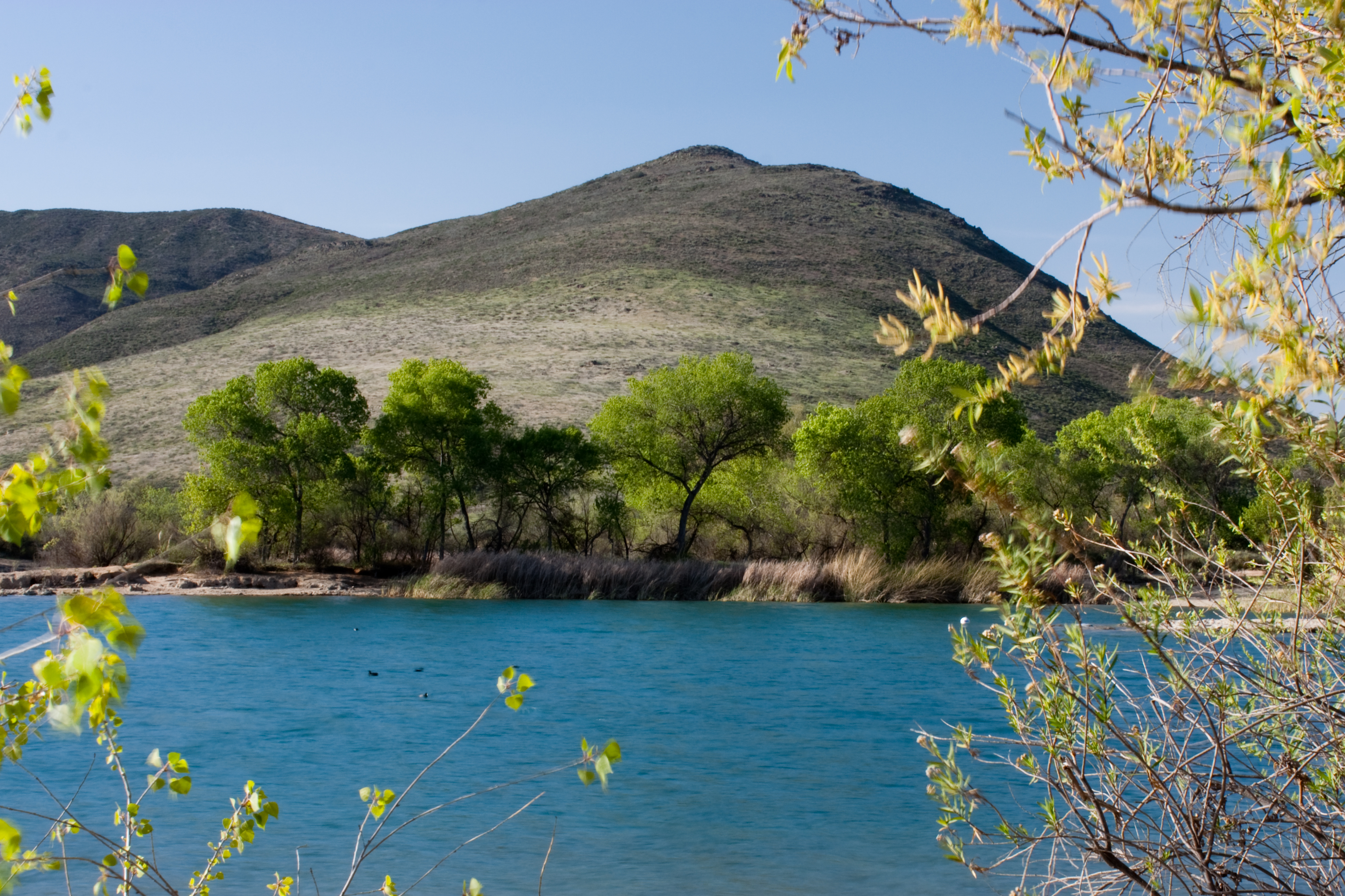
Lake Skinner, Riverside County California
Future post on Lake Skinner and the Temecula Beavers |
Further Reading references:
Bureau of Reclamation Forecasts Lower Water Release from Lake Powell to Lake Mead for 2014
(Very Kool Link) "Colorado River Map Zoomifier"
Endangered fish program working to right wrongs of the past
Grant County, Oregon: "Beavers, fish and cows: Beavers, Salmon and Cattle: Restless co-existence"
http://www.martinezbeavers.org - "Worth A Dam"